Subway Menu With Prices 2026 Sub of the Day

This guide delivers a straightforward snapshot of the Subway pricing menu for 2026. It points out what customers in the USA should understand right now.

Nationwide, Subway has rolled out the new Fresh Value lineup and updated Subway Series items. Even so, regional pricing differs, with New York City posting steeper menu prices. As one example, the Bacon Egg and Cheese option costs $8.39 in NYC. New Subway Series options like the Spicy Nacho Chicken and The Beast are available in both 6″ and footlong formats.


The new menu also spotlights value picks. Many participating stores offer four Deli Faves for $3.99 on 6″ subs, Protein Pockets for $3.99, and Sub of the Day for around $4.99. Keep in mind, prices in California, Washington, Alaska, and Hawaii can be more expensive. Delivery or third-party fees can also raise the cost.

The following sections will walk through bread options, Subway menu prices with pictures, and how to find local costs. Consider this introduction as a fast orientation. Next, the guide explores more specific price examples, bread choices, add-ons like avocado, and catering bundles in the sections that follow.

Subway Menu Overview And New 2026 Updates

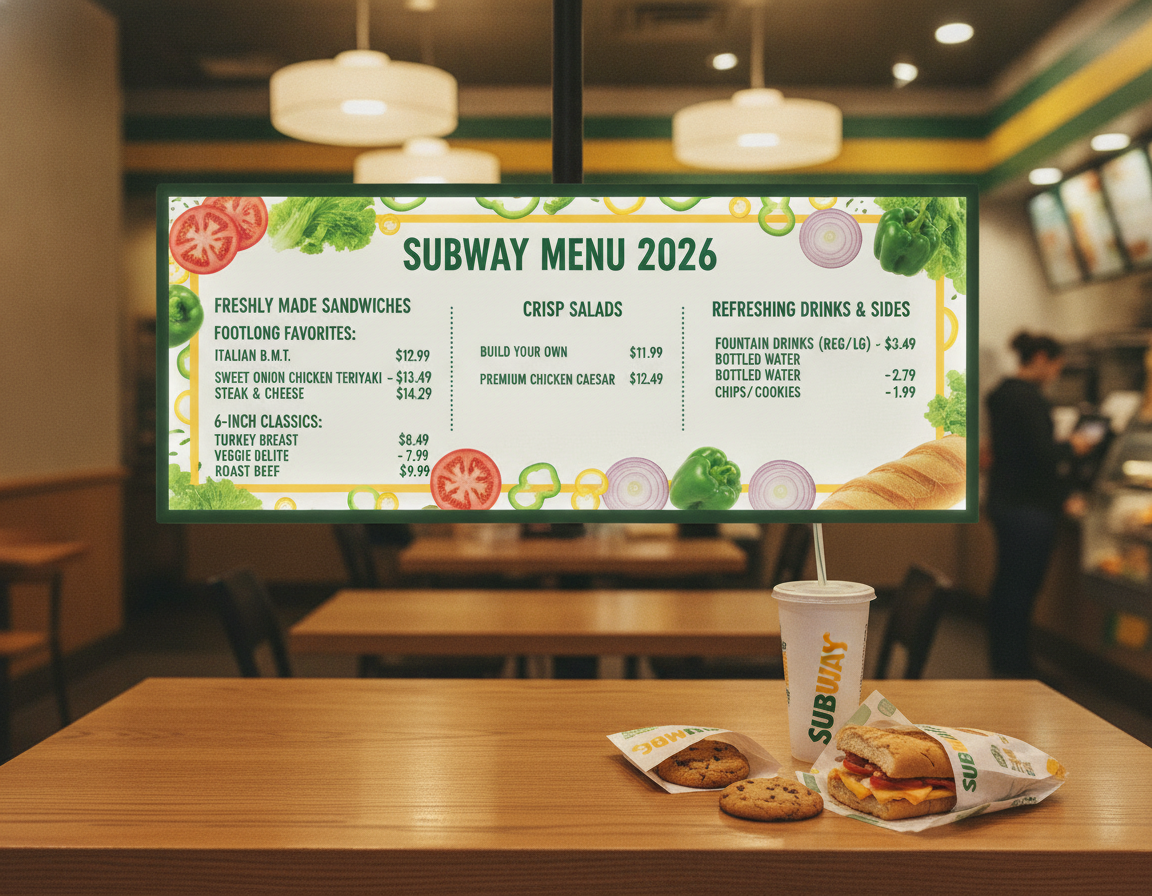
Subway Menu With Prices 2026

Subway’s 2026 menu refresh introduces fresh flavor combinations and more visible pricing cues. The Subway Fresh Value Menu will be offered in most U.S. markets. Certain locations will also feature limited-time breads and signature sandwiches with more adventurous ingredients. Local availability is not identical everywhere, so confirm nearby store menus before ordering.

What’s New On The 2026 Menu

The chain rolled out the Subway Series with twelve new sandwiches and signature sauces. The newer value menu includes 15 entrees under $5, including Deli Faves and Protein Pockets at $3.99. In certain cities like New York, customers may see occasional limited breads, such as the ghost pepper return. Major city markets will also offer expanded all-day breakfast.

How Pricing Varies By Location

Current Subway menu prices shift considerably by region. Six-inch sandwiches cost between $5 and $8 in most areas, while footlongs range from $8 to $12. Menu totals may rise in California, Washington, Alaska, and Hawaii. Final totals may include extra charges for tax, delivery, and third-party fees. Use the Subway App to verify current local offers and participating locations.

Where Official Subway Menu PDFs Can Be Found

Subway posts downloadable subway menu PDFs on Subway.com and in the Subway app. Independent menu-price sites like SubwayMenuPrices.org can help compare local prices and menus. If a local restaurant doesn’t have a bread or topping, the app will flag it before checkout.

Pricing Source Information Shown Best Use
Official Subway Website Official menus, nutrition details, and downloadable subway menu PDFs Confirm ingredients and official pricing details from Subway announcements
Official Subway App Store-level pricing, digital offers, and local availability Compare nearby stores, order ahead, and redeem digital deals
SubwayMenuPrices.org Aggregated local price comparisons and downloadable menus Simple cross-market price checks before ordering
Onsite menu displays Same-day pricing, daily offers, and store-level item availability Confirm same-day toppings, breads and limited items

Subway Menu With Prices 2026

The following is a quick breakdown of recent Subway menu prices and representative items. This gives customers a look at typical costs and choices for 2026. Costs differ by region and participating restaurants, with increased prices in states like California, Washington, Alaska, and Hawaii. These examples combine New York City figures and national value-menu listings to give a practical snapshot of subway menu prices across formats.

Popular Sandwich Sample Price Ranges

Typical sandwich price examples combines New York City highlights and broader lists. A Steak & Cheese 6″ often runs near $10.79 with a footlong about $16.19. A footlong Spicy Nacho Chicken can hit roughly $15.39. Higher-end sandwiches like The Beast footlong may cost around $17.89. Older favorites can show broader price bands: Meatball 6″ from $5.49 to $8.69 and footlong examples near $12.89 in some menus.

Sandwich Six-Inch Price (Approx.) Footlong Cost (Approx.) Estimated Calories
Steak And Cheese About $10.79 $16.19 About 650–1,300
Spicy Nacho Chicken Sub Approx. $8.99 $15.39 About 700–1,400
The Beast $11.19 About $17.89 900–1,600
Meatball Marinara Sub Approx. $5.49–$8.69 Approx. $8.79–$12.89 Approx. 700–1,200

Breakfast, Wraps, Salads, And Bowls Pricing

The subway breakfast menu includes familiar morning items with mid-range pricing. A Bacon, Egg & Cheese sandwich is about $8.39. Wrap choices often run higher: a Steak, Egg & Cheese wrap example is roughly $13.79.

Bowls and breadless choices may show near-footlong pricing for premium fillings. The Philly bowl often comes in near $16.19. A Sweet Onion Chicken Teriyaki bowl shows near $15.39. Salad choices like Chicken & Bacon Ranch or a Philly salad are commonly about $13.19. For customers wondering how much is a footlong at Subway across different items, expect $10–$18 depending on the recipe and market.

Item Type Common Price Range Notes
Morning Sandwiches Approx. $5.49–$8.39 Egg items with availability that changes by region
Wrapped Options Approx. $8.99–$13.79 Review wrap pricing because fillings and locations affect cost
Bowls $12.99–$16.19 No-bread choices that often price close to footlong subs
Salads $9.99–$13.19 Subway salad choices usually blend meats, toppings, and vegetables

Sides, Cookies, Drinks, Catering And Bundles

Sides and combo deals are still important for budget orders. Many combo examples (sub + chips + drink) fall near $8–$10 at many locations. Subway’s value menu spotlights Deli Faves 6″ at $3.99, Protein Pockets at $3.99, and Sub of the Day 6″ for $4.99 on rotation.

Cookie costs show a broad range. The 6-pack cookie option can be about $4.49 while a single footlong cookie lists near $5.00–$5.99. When checking the individual cookie cost, the subway footlong cookie price often lands in that range depending on store.

Item Sample Price Quick Notes
Sub Combo With Chips And Drink About $8–$10 Available at participating stores; adding chips and a drink may cost about $2 on value items
6-pack Cookies About $4.49 Simple add-on for sharing or snacking
Single Footlong Cookie About $5.00–$5.99 Large dessert item; pricing changes by store
Bottled Beverages Approx. $2.99–$3.49 Drink prices can differ by restaurant and format
Catering Platters Approx. $60–$75 Group platters built around sandwiches and wraps

Value-focused customers should review local menus and apps for region-specific subway menu prices. Aggregate guides like SubwayMenuPrices.org collect full subway menu details and can make it easier to compare offers. Remember taxes and delivery costs when estimating final costs.

Bread Choices, Toppings, Sauces And Subway Customization Options

Subway empowers you to build your perfect sandwich. Begin by selecting from a variety of subway menu bread choices. Then, add your favorite veggies, proteins, and sauces. Subway.com and the app provide a list of available bread options at your local Subway.

Popular Subway Bread Options

  • Italian — the classic base for many subs and often cited as the best subway bread by fans who like a soft crumb.
  • Hearty Multigrain — a more substantial bread with seeds, texture, and a heartier feel.
  • Wheat — a gentler whole-wheat choice that works nicely with turkey, vegetables, and lighter builds.
  • Flatbread / Lavash — a thinner wrap form found in many stores, popular for breakfast and lighter builds.
  • Garlic & Herb — a flavored option available in select markets, often used for limited-time sandwiches.

Subway Breads Names And Regional Varieties

Certain New York City and regional stores offer specialty items like lavash or occasional limited breads. The available Subway bread list can vary by store because not every restaurant stocks every loaf.

Common Subway Toppings And Add-On Choices

  • Lettuce, tomatoes, cucumbers, onions, and green pepper toppings
  • Olives, pickled toppings, spinach, jalapeños, and banana peppers
  • Avocado — commonly available as a paid add-on in participating stores

Common Subway Sauces And Condiments In The USA

Subway provides classic and signature sauces. Expect mayo, honey mustard, garlic aioli, chipotle, creamy Sriracha, sweet onion sauce, and Peppercorn Ranch. For the most current U.S. sauce list, check the app or in-store menu where regional sauces may appear.

Dietary Options And Gluten-Free Notes

Does Subway have gluten free bread? Certain participating locations have carried gluten-free bread on a trial basis. Many guests choose No Bready Bowls or salads as an alternative to avoid gluten. Be aware of cross-contact risks when ordering subway gluten free bread and check local availability before assuming it’s an option.

Customization Tips

  1. Choose bread that works with your protein and sauce choices so the flavors feel balanced.
  2. Ask for hand-chopped veggies to keep freshness high.
  3. Check the app to confirm which subway breads names and menu bread choices are available near you.

Subway Deals, Rewards, And Savings Tips For 2026

Finding the best Subway discount requires a blend of timing, tools, and adjusting your habits. Always check for promotions before placing your order. That makes it easier to find savings and avoid unexpected delivery fees. Keep in mind, prices can vary by state, so consider location when comparing orders.

Fresh Value Menu deals can be useful for everyday savings. This lineup offers around 15 entrees under $5, with Deli Faves and Protein Pockets often priced at $3.99. The Sub of the Day offers a $6.99 six-inch sandwich, helping to reduce your meal cost. Turning it into a small combo can turn a small purchase into a more satisfying meal for a small extra charge.

MVP Rewards from Subway helps customers collect and use rewards. Sign up, link your purchases through the Subway app, and start collecting points. These points can be exchanged for Subway Cash on future orders. The Subway app also offers exclusive promotions and digital coupons, adding to your savings.

To cut costs even more, combine coupons with strategic ordering. Check current Subway coupon offers before large orders and pair them with in-app deals when possible. Select Fresh Value Menu items or share a footlong to split the cost. When adding sides, choose bundled chips and drinks instead of separate items.

Planning group orders and events can also save money. Boxed lunches and catering platters often lower the cost per sandwich. Compare prices on SubwayMenuPrices.org and the Subway app to find the best deals for your event. Be sure to include taxes, regional price hikes, and extra charges for customizations when calculating the final cost.

Remain alert on new menu prices and promotional periods. Subscribe to Subway messages and enable app notifications to catch special offers and flash coupons. Families may also look for the latest kids meal promotions, which often include toys or bundled savings at certain locations.

Building a few simple habits can noticeably lower your spending at Subway. Order during value hours, use rewards, compare catering options, and be aware of regional price variations. With these savings habits, you can save money while enjoying Subway’s catering and everyday deals.

Conclusion

This Subway Menu With Prices 2026 overview offers a combination of updated menu items and long-running staples. Costs for 6″ subs usually range from $5 to $8, while footlongs cost between $8 and $12. Specialty items and locations in big cities like New York can increase prices. It’s essential to check local prices, as availability of all-day breakfast and regional variations differ.

The 2026 value lineup includes about 15 items under $5. Examples include Deli Faves, Protein Pockets, and Sub of the Day. Store participation and prices can vary by store and region. The most reliable way to check current offers and digital savings is through official Subway channels. Digital rewards, app deals, and in-store offers are helpful for regular savings on regular and catering orders.

For current Subway prices and menu details, visit Subway.com or use the Subway app. Those tools offer up-to-date pricing, downloadable PDFs, and nutrition facts. If you’re looking for the newest menu items or a full list of customization options, these tools are important. Use this article as a practical guide for planning quick meals or group orders.

Commercial Kitchen Maintenance with Grease Cleaning Pros in Hermosa Beach

For restaurant owners in the foothills, a reliable partner for kitchen maintenance is essential. Grease Cleaning Pros is recognized as the leading provider in the La Crescenta Montrose community. We specialize in keeping food establishments running smoothly.

See details about Grease Cleaning Pros in Hermosa Beach

Find out more about Grease Cleaning Pros in Huntington Park

This resource is about Grease Cleaning Pros in Inglewood

Our team specializes in commercial kitchen grease trap cleaning and interceptor maintenance. We also handle used cooking oil collection. Our approach is friendly, reliable, and efficient.

Consistent professional service helps prevent costly plumbing disasters. It also reduces the risk of health code violations and operational disruptions. This small investment protects your business’s reputation and customer safety.

We tailor our grease trap cleaning schedules to each kitchen’s unique needs. Our methods use state-of-the-art equipment. All waste disposal and recycling follow EPA-compliant standards.

Our commitment is to prompt, thorough service with minimal disruption. Discover the peace of mind that comes with a trusted maintenance partner.

Key Takeaways

  • Grease Cleaning Pros is the leading service provider for restaurants in the area.
  • Services include grease trap cleaning, interceptor maintenance, and used cooking oil collection.
  • Prevents expensive plumbing issues, health code problems, and operational downtime.
  • Services are customized to each kitchen’s specific volume and menu.
  • Relies on modern equipment and EPA-compliant recycling and disposal practices.
  • Routine maintenance is a wise investment that helps protect your business.
  • Provides prompt, detailed service with minimal interruption to daily operations.

Grease Cleaning Pros in Hermosa Beach

Welcome To Grease Cleaning Pros Serving La Crescenta Montrose

Owning a restaurant in this community comes with challenges that are both rewarding and demanding. Our team extends a warm welcome to yours. We know the daily grind of managing a food service business.

We deeply understand the unique pressures you face. Managing kitchen fats, oils, and compliance is a constant task. That’s where our local expertise becomes your advantage.

Our philosophy is simple. We treat your kitchen’s plumbing and containment system with the utmost care. It’s not just a job for us; it’s about protecting your operation.

We see ourselves as partners in your success. Our goal is to help you avoid unexpected costs and costly downtime. This proactive approach saves you money and stress over time.

Our knowledge covers Montrose and La Crescenta municipal regulations. We’re familiar with common local sewer issues. This ensures your business stays on the right side of health codes.

Friendly customer service is our cornerstone. We always take the time to explain our trap cleaning process. No question is too small for our team.

You can trust us to handle all waste responsibly. Our waste disposal and recycling methods are thorough. We prioritize protecting the local environment for everyone.

We work around your schedule. Flexible appointment times mean minimal disruption to your service. Your operational needs always come first.

Ultimately, we aim to build lasting relationships. These are founded on trust, reliability, and excellent results. Let’s keep your kitchen running smoothly, together.

The Essential Importance Of Routine Grease Trap Cleaning

A neglected grease trap is more than a plumbing issue; it’s a ticking time bomb for your restaurant’s bottom line. Overlooking this vital piece of equipment isn’t a minor oversight. It’s a serious business risk with real financial and legal consequences.

Avoiding Expensive Fines And Health Department Shutdowns

Health inspectors take grease trap compliance very seriously. If they find an overfull or malfunctioning unit, they can issue immediate violations. In severe cases, they can force a temporary shutdown of your operation.

The fines for these violations are no joke. They can range from $1,000 to a staggering $50,000. This sum far exceeds the predictable, affordable cost of routine trap cleaning.

Compare that with spending only a few hundred dollars on scheduled service. An emergency repair or responding to a health department order can cost thousands. It’s a clear choice for protecting your money and operations.

Protect Your Reputation, Customer Safety, And Kitchen Equipment

A serious backup leads to foul odors and visible grease. This can drive customers away and damage your hard-earned reputation overnight. No one wants to dine where things seem unsanitary.

Safety hazards are a major concern. Slippery floors from an overflow can cause serious employee or customer injuries. This opens the door to costly lawsuits and further reputational harm.

Grease blockages rarely remain isolated. They strain your entire sewer and plumbing system. This leads to premature failure of pipes, pumps, and other expensive kitchen equipment.

Professional cleaning is not an optional expense. It’s an essential part of responsible kitchen management. Proper waste disposal also protects the local environment.

Partnering with Grease Cleaning Pros for scheduled service is the simplest way to mitigate all these risks. We handle the job so you can focus on running your restaurants. This proactive step saves you stress and money over time.

How Often Should You Clean Your Grease Trap In La Crescenta Montrose?

One of the most frequent inquiries we receive concerns the optimal frequency for maintaining essential plumbing components. There is no universal schedule that fits every food service business. The right answer depends entirely on your specific kitchen’s output and daily practices.

A proper maintenance calendar is the cornerstone of compliance, efficiency, and trouble-free operations. Getting it wrong can lead to costly problems. Getting it right provides peace of mind.

The Key Factors That Determine Your Cleaning Schedule

A widely enforced municipal standard is known as the 25% rule. This rule states that a grease trap must be serviced when fats, oils, and solids fill one-quarter of its capacity. At this point, the unit loses efficiency and becomes a compliance trigger.

This rule helps shape general service guidelines. A busy full-service restaurant often needs monthly pumping. A smaller cafe might manage with quarterly service.

High-volume establishments frequently require bi-weekly attention. Some fast-food restaurants need weekly maintenance due to their output.

Several key elements directly impact how quickly your traps fill up:

  • Menu Items: A fried-food-heavy menu produces substantially more grease than one based on salads or baked items.
  • Customer Volume: More customers mean more dishwashing, sending greater amounts of fats and food particles into the water system.
  • Trap Size: The physical dimensions of your unit determine how much waste it can hold before service is required.

How To Comply With Local Regulations And Capacity Guidelines

Knowing and following your local codes is non-negotiable. La Crescenta Montrose may have specific pumping frequency mandates. These regulations are designed to protect the public sewer system and community health.

Keeping detailed pumping records is something we strongly recommend. This log helps you track fill rates over time. You can then adjust your schedule proactively based on real data.

Guessing is a risky strategy for your business. A professional assessment from our team can establish a data-driven maintenance plan. We evaluate your kitchen practices, volume, and equipment.

This assessment pinpoints your exact needs. It ensures you’re not servicing too often and wasting money. More importantly, it prevents you from servicing too infrequently and risking violations.

Proper disposal of the collected waste is part of our compliant service. An appropriate, professional schedule is your best defense against emergencies. It keeps your focus on your customers, not your plumbing.

Signs Your Grease Trap Needs Immediate Professional Attention

A properly functioning trap stays out of sight and out of mind, but when problems begin, the warning signs become obvious. Learning to recognize these distress signals is crucial for every food service operator. Ignoring them can turn a small issue into a major, costly crisis.

Before total failure occurs, your containment unit gives off clear warning signs. These symptoms indicate that your plumbing needs professional service right away. Addressing them promptly protects your kitchen’s efficiency and compliance.

Early Warning Signals: Slow Drainage And Foul Odors

An early warning sign you will often notice is slow drainage. You might notice water pooling in your three-compartment sink or prep sinks. This sluggish flow often means fats and solids are clogging the pipes.

Another warning sign is gurgling from the drains. These noises indicate air trapped in the lines due to blockages. It’s a telltale sign that your system is struggling.

Then there is the odor. A foul, rotten-egg odor is hard to miss. This is hydrogen sulfide gas produced by decomposing organic matter.

It’s not just unpleasant; it can be toxic in enclosed spaces. This odor is a clear signal that your trap is overdue for attention.

Grease Backup And Gurgling Drains

If oily sludge starts backing up into sinks or dishwashers, immediate action is necessary. This visible grease means the unit is full and immediate service is critical. The waste has nowhere else to go.

Other major red flags include grease splatter or buildup around floor drains. Multiple drains clogging at once points to a central problem. A sudden increase in flies or rodents can also signal an issue.

Standing water near the trap is a serious warning sign. Grease seepage outside the unit indicates a severe overflow. These are emergencies that threaten your operations.

These warning signs should never be ignored or treated with a DIY solution. Home remedies often worsen the blockage. This leads to more expensive repairs and potential health code violations.

As soon as trouble appears, reach out to Grease Cleaning Pros. We offer prompt emergency service to resolve these issues quickly. Our team handles everything from pumping to proper waste disposal.

Our work restores your kitchen plumbing to safe and efficient operation. Don’t wait for a shutdown; contact us today for reliable, friendly help.

Our Thorough Grease Trap Cleaning Process In La Crescenta Montrose

Our team follows a rigorous three-step protocol on every job to ensure complete results. We believe in a transparent, methodical approach that leaves nothing to chance. This ensures your kitchen plumbing operates at peak performance after every visit.

Our team is trained to execute each step with precision and care. The entire service is designed for maximum effectiveness with minimal disruption. You can trust us to handle the dirty work so you can focus on your customers.

Step 1: Initial Inspection And Compliance Documentation

A friendly technician arrives at the scheduled time. They first locate and safely access your containment unit. An initial visual inspection is performed to gauge the overall condition.

The technician then measures the thickness of the grease layer and the level of settled solids. This critical data is recorded immediately. It serves as official documentation for your health and regulations compliance records.

This evaluation sets the baseline for the cleaning required. It also helps us track your unit’s fill rate over time for better scheduling. We start every trap cleaning with this essential information-gathering step.

Step 2: Pumping And Deep Cleaning

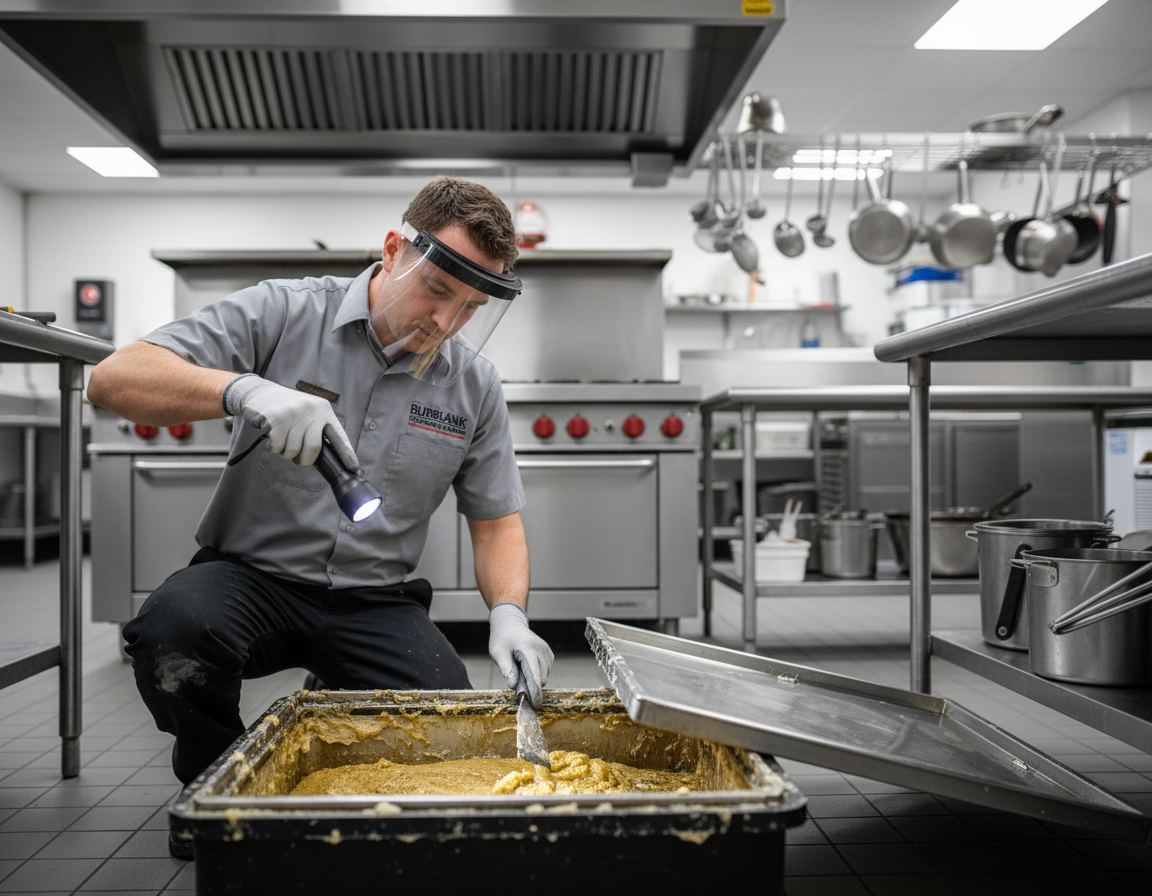
We use a powerful vacuum truck to efficiently remove all contents from the grease trap. This includes floating fats, wastewater, and settled food solids. The powerful suction ensures a complete evacuation of the waste.

A truly clean system requires more than pumping alone. Our technicians then manually scrape the baffles and interior walls. This removes clinging residue that vacuum suction can miss.

We then apply high-pressure washing to thoroughly clean the interior surfaces. This step eliminates any remaining film or debris. We also inspect all inlet and outlet pipes for hidden blockages.

This phase also includes a crucial structural integrity inspection. We look for any cracks, leaks, or damage that could cause future sewer issues. Identifying problems early prevents costly emergencies.

Step 3: Final Inspection And Correct Refill

After the interior is fully cleaned, we perform a final quality inspection. We ensure every surface is clean and all connections are secure. Only then do we move to the last, vital step.

Clean water must be added back to the proper level. This is essential for the grease trap to function correctly the moment we leave. It creates the necessary seal and allows for immediate separation of new waste.

Throughout the job, safety is always our priority. We ventilate the work area to avoid exposure to gases. Our team also performs a thorough cleanup, leaving your space as tidy as we found it.

The full trap cleaning process generally takes between 30 and 90 minutes. This efficiency minimizes disruption to your restaurants workflow.

Our thorough multi-step process distinguishes us from other providers. It guarantees your system’s reliability and your peace of mind. You receive more than just a pump-out; you get a complete cleaning and inspection service that protects your business.

Grease Interceptor Maintenance For Larger Facilities

In major kitchens, the backbone of the plumbing setup is a large containment system. For hotels, hospitals, and big restaurants, a simple under-sink unit won’t suffice. These operations require a heavy-duty solution to manage their significant output.

This is where a grease interceptor comes into play. It’s a critical piece of infrastructure that protects the entire building’s sewer lines. Proper upkeep is not just recommended; it’s essential for the business.

Differences Between Grease Traps And Grease Interceptors

It is essential to understand how these two devices differ. They serve the same basic purpose but on a completely different scale.

The standard grease trap is a compact unit located indoors. You’ll typically find it under a three-compartment sink. Its capacity is relatively small, often between 20 and 50 gallons.

By contrast, a grease trap interceptor is a large underground vault. These units are designed to hold hundreds or even thousands of gallons. They handle the waste from an entire building or multiple kitchens.

Below is a simple breakdown of the key differences:

  • Size & Location: Traps are compact indoor units, whereas interceptors are larger and installed underground outside.
  • Capacity: Grease traps usually hold dozens of gallons, while a grease interceptor may hold 500 to 5,000 gallons or more.
  • Service Scope: Traps typically serve one sink or appliance, while Interceptors manage flow for an entire facility.

These larger trap interceptor units are commonly used in food courts, banquet halls, and institutional cafeterias. Their high-volume needs make a standard grease trap impractical.

Specialized Cleaning Procedures For Interceptors

Servicing a large grease interceptor is a demanding task. It requires heavy-duty equipment and specific expertise. Our team is fully equipped to handle this challenging service.

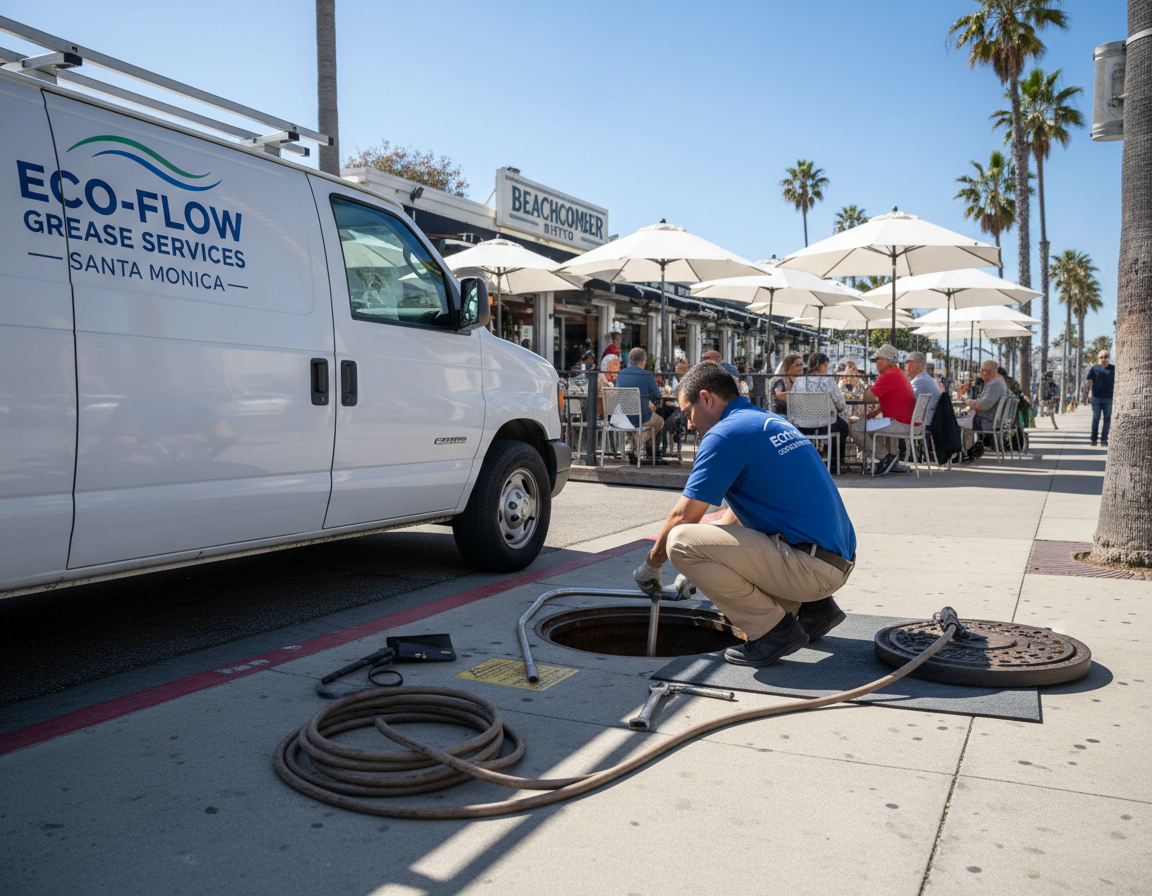
The process begins with safely accessing the unit. We use specialized tools to remove the heavy concrete or metal lid. This provides direct access to the massive interior compartments.

Next, we deploy a powerful vacuum truck. This equipment pumps out thousands of gallons of waste and water. We ensure every compartment is completely evacuated.

Once pumping is complete, our technicians carry out a deep cleaning. They manually scrub the interior surfaces and baffles. This removes any hardened residue the vacuum might miss.

After cleaning, we perform a thorough inspection. This is a crucial step for preventing future problems.

  • Our team checks inlet and outlet tees for clogs.
  • We search for any cracks, leaks, or structural issues.
  • We test whether groundwater infiltration is placing excess load on the system.

Quarterly service is common for these units. Extremely high-output kitchens might need monthly service. We help you determine the right schedule based on your volume.

For major clogs in the connected lines, hydro jetting may be recommended. This technique uses a powerful hydro jet of water to blast through stubborn clogs. Hydro jetting restores full flow and protects your plumbing.

Neglecting a large trap interceptor can cause failure across the whole system. That’s why professional cleaning is non-negotiable. It saves you time, money, and ensures compliance with local regulations.

Our provider can be trusted to handle these complex jobs. We have the expertise and heavy equipment to do it efficiently and safely. Let us handle the big jobs so you can focus on running your facility.

Helpful Tips To Reduce Grease Buildup In Your Kitchen

Managing fats, oils, and grease starts long before they reach your containment system. The best defense is a daily routine that minimizes what goes down your drains. Combining smart habits with professional support forms a complete strategy for any food service business.

Following this approach saves time, protects equipment in your kitchen, and helps maintain compliance. It also makes our scheduled service visits more effective and efficient. Let’s explore how your team can make a big difference.

Best Practices In Staff Training And Kitchen Operations

Building a proactive workplace culture is essential. Every team member should understand their role in prevention. Comprehensive training explains why this matters for their work environment and the business’s success.

The best starting point is a set of simple, consistent rules for your kitchen operations. Scrape plates and pans thoroughly into the trash before they touch dishwater. This keeps large food particles out of the plumbing.

Install and maintain sink strainer baskets. Empty them frequently throughout the shift. A quick wipe of greasy pans with a paper towel can capture a surprising amount of oil.

The most important rule is non-negotiable. Never pour any fats, oils, or grease down a drain. Even small amounts quickly accumulate in pipes and cause major blockages. Hot water only melts it temporarily; it solidifies further down your system.

Proper Disposal And Recycling Of Used Cooking Oils

For fryer oil and other waste, proper handling is crucial. Always collect used cooking oil in dedicated, leak-proof containers. Label them clearly and store them in a safe, designated area.

A professional collection service can simplify the entire process. A reliable provider schedules regular pickups, handling the messy oil disposal for you. This ensures safe and compliant disposal every time.

There are major benefits to recycling this material. Used cooking oil is transformed into biodiesel, a renewable fuel. Many businesses earn rebates for their recycled cooking oil, turning waste into money.

This has a major environmental impact. Recycling just one gallon of used cooking oil can prevent the contamination of up to one million gallons of fresh water. It’s a simple choice with a powerful effect on our local environment.

For extra protection, you may want to install secondary grease-catching devices beneath fryer stations. Maintain these devices according to the manufacturer’s instructions. They provide an extra layer of defense for your plumbing.

When these daily practices are combined with regular professional maintenance from Grease Cleaning Pros, they form a powerful defense. You protect your operations, support community health, and contribute to a cleaner environment. It’s a winning strategy for everyone.

Choose Grease Cleaning Pros For Reliable, Friendly Service

A dependable maintenance provider is essential to your kitchen’s efficiency and compliance.

Every job benefits from our local expertise and friendly approach. We work around your schedule with early or late appointments to avoid disrupting your operations.

Modern, quiet equipment allows us to provide efficient service. Our process includes pumping, scrubbing, and inspecting your entire plumbing system. We provide detailed records for health inspections.

View our service as an investment in the safety and reputation of your business’s operation. Let’s keep your restaurants running smoothly.

Check your last maintenance date. If it’s been a while, contact us for a friendly consultation. We’re here to serve our community.

Related: Getting the Most Value from Your Grease Trap Cleaning Manhattan Beach Service

Grease Trap Pumping in Whittier New Restaurant Opening Essential First Pumping

Our California-based team is committed to stopping these headaches before they start. We provide expert maintenance to keep your commercial kitchen running smoothly and in full compliance. To run a successful food service business, you need dependable back-of-house systems. A critical but often overlooked part of that setup is your trap and interceptor system. When it fails, you face messy plumbing disasters and costly health code violations.

This site is about Grease Cleaning Pros in Whittier

Click here for Grease Cleaning Pros in Woodland Hills

This website is for Grease Cleaning Pros in Oxnard

This guide will walk you through why consistent care for this equipment is non-negotiable. We will cover our complete service process, reveal warning signs you must watch for, and explain how easy it is to get reliable support.

Our services support many different types of businesses. This includes restaurants, hotels, schools, and catering companies. Every service plan is tailored to the size and unique demands of your operation.

Our friendly staff uses advanced equipment for every job. We manage everything from routine pumping for a small café to large-scale interceptor service for major facilities.

Professional maintenance should be seen as a wise business investment. It stops expensive fines, avoids emergency repairs that can shut you down, and safeguards your establishment’s good name.

Main Takeaways

  • Routine trap and interceptor maintenance is essential for every commercial kitchen.
  • Expert service supports compliance with all local health and safety requirements.
  • Overlooking early signs like bad odors or slow drainage can create major issues.
  • Businesses of every size and volume can benefit from customized service solutions.
  • Scheduling service proactively helps avoid disruptive emergencies during busy hours.
  • Proper handling of waste fats and oils contributes to a cleaner environment.
  • A partnership with a committed local team helps provide lasting peace of mind.

Why Professional Grease Trap Cleaning Is Essential For Your Business

Skipping professional grease trap maintenance is a gamble no food business can afford. This is not only about following rules; it is about protecting your livelihood. Regular professional service is what helps keep operations smooth and your reputation clean.

Prevent Major Fines And Health Department Shutdowns

Health inspectors are not likely to ignore a neglected trap. A unit that exceeds 25% capacity can trigger an immediate violation. Fines for this kind of violation are steep, ranging from $1,000 to $50,000.

Even worse than a fine is a forced shutdown. Shutting down for even a day hurts your income and scares away customers. The best way to protect yourself from these devastating outcomes is with a professional maintenance plan.

Grease Cleaning Pros in Whittier

Avoid Expensive Plumbing Emergencies And Repairs

Think about the financial math. Routine service may only cost a few hundred dollars. Emergency plumbing excavation work can easily cost thousands. On top of that, you lose revenue while your kitchen cannot operate.

If not contained properly, fats and oils will solidify in your plumbing. That buildup creates serious clogs that can damage sinks and dishwashers. Investing in routine upkeep helps stop these expensive disasters before they happen.

Maintain A Safe And Odor-Free Kitchen Environment

Foul smells are a major red flag. A rotten egg smell often means grease is decomposing and releasing harmful gas. This unhealthy atmosphere makes the space unpleasant for employees and guests alike.

A well-maintained system also prevents pest infestations and slip hazards. It creates a safer, more hygienic workspace for your team. It can improve morale while supporting more efficient daily operations.

It is important to remember that no kitchen can stop every bit of grease. It travels through dishwater and steam. Professional service takes care of this unavoidable buildup and provides long-term peace of mind.

Grease Cleaning Pros In Whittier: Comprehensive Services For Your Kitchen

Every commercial kitchen, regardless of its size, relies on a hidden hero to manage waste fats and oils effectively. We aim to be that dependable partner for your operation. Our team offers complete solutions to keep your plumbing working properly and your establishment in compliance.

We work with a diverse array of establishments. That includes busy restaurants, small cafes, and fast-food locations. Our services also support large commercial kitchens, hotels, and military facilities.

Food processing plants, schools, universities, and catering companies also trust our team. Each solution is customized for the specific volume and demands of your operation.

Scheduled Grease Trap Pumping And Cleaning

This is the core preventive service for long-term system care. Our experts efficiently remove the accumulated layer of fats, wastewater, and settled solids. That helps restore your unit to peak performance, usually within 30 to 60 minutes.

We determine the ideal service frequency specifically for your business. It depends on your menu, customer volume, and the capacity of your equipment. For a busy fry kitchen, monthly service may be necessary.

A lower-volume café might only require quarterly service. Some fast-food establishments require bi-weekly trap maintenance. We use local regulations and operating conditions to determine your ideal schedule.

Large-Scale Grease Interceptor Maintenance

High-volume facilities need more powerful service options. These interceptors are large underground units, often ranging from 500 to 5,000 gallons in capacity. They are commonly built from concrete or fiberglass to handle heavy volume.

Cleaning these larger units is a more complex job. This process includes opening heavy covers and extracting thousands of gallons of waste. Our team thoroughly cleans each compartment.

We also inspect the inlet and outlet tees for signs of damage. Looking for groundwater infiltration is a critical part of this service. Our specialized pump trucks and expertise are made for this job.

Emergency Cleaning Services For Critical Situations

Unexpected problems can shut down a kitchen fast. We offer urgent response for sudden backups or overflows. A pre-inspection panic is another common reason businesses call for emergency help.

Our goal is to minimize disruption and get you back to business quickly. Real-life operations do not always stick to a planned maintenance schedule. A reliable emergency team gives you the peace of mind that help is available when you need it.

Our skilled team handles all types and sizes of equipment. We take pride in working around your schedule. With early morning or late evening scheduling, we avoid interfering with your peak business hours.

From emergency one-time service to recurring maintenance plans, we deliver documented and professional support. This helps keep your full system operating smoothly and your kitchen fully compliant.

Our Detailed Grease Trap Cleaning Process

Because transparency builds trust, we follow a detailed procedure for every job. You can feel confident because you know exactly what our experts do during each service visit. This process helps ensure each job is done right the first time.

Our process is built to maximize efficiency and compliance. Our team works quickly and respectfully so disruption stays minimal. Every step is completed with professional care from beginning to end.

Assessment And Documentation To Support Compliance

Our team begins with a professional assessment at your location. Our team safely locates and opens the equipment, knowing that gases can accumulate inside. Safety for both our crew and your staff is always the highest priority.

We immediately measure the layer of fats and document the unit’s condition. That documentation is important evidence for health department inspectors. It also creates a valuable history for tracking your maintenance needs over time.

High-Powered Pumping And Complete Scraping

Next, our powerful vacuum truck is used for the main cleaning and pumping phase. This equipment efficiently removes the full contents of waste from the vessel. Every layer of floating grease, wastewater, and settled solids is extracted during this step.

Just pumping out the liquid is not enough to stop future clogs. Our technicians then hand-scrape the internal baffles until they are clean. This step clears away hardened deposits that may cause serious flow restrictions.

Pressure Washing And System Inspection

A thorough pressure wash comes next. We blast the interior walls and components to remove any residual grime. That step helps return the trap to a near-new condition.

The system inspection is a critical part of our service. We inspect inlet and outlet pipes for signs of blockage. We also examine the structure for cracks, wear, or damage.

The final, crucial step is refilling the unit with clean water. An empty trap cannot function correctly to separate new grease. We prime it to the proper level so it’s ready for immediate use.

Our friendly, efficient process is both comprehensive and fast. Most standard trap cleaning jobs take roughly 30 to 90 minutes. You can then return to kitchen operations with full confidence your system is clean and effective.

Signs Your Grease Trap Needs Immediate Attention

Grease management equipment usually does not fail quietly. It sends obvious warnings that require action.

Learning to spot these distress signals is crucial for any kitchen manager. Spotting the problem early can be the difference between a simple service visit and a major emergency.

These problems often reveal themselves through odors, noises, and visible signs. Responding to these signs helps protect your plumbing from serious damage. It also keeps your staff safe and your business running.

Slow Drains And Strange Gurgling Sounds

The most common early sign is slow-draining sinks. Watch the three-compartment sink closely, since that is where much of the food waste is rinsed.

When water collects in the basin instead of draining properly, that is a warning sign. That is often the first red flag that your trap is nearing capacity.

Pay attention to gurgling sounds coming from floor drains. These noises often indicate trapped air escaping around a blockage. It points to a significant buildup forming in your lines.

If multiple drains start having problems at the same time, the issue is probably systemic. It should not be treated as a simple isolated blockage. Your entire system may already be overloaded.

Foul Smells And Visible Grease Overflow

A strong rotten egg odor is a major red flag. This is hydrogen sulfide gas from decomposing organic waste.

It’s not just a nuisance odor. That smell suggests a hazardous environment and a completely overloaded unit. Those odors indicate the separation process is no longer working.

Visible grease backup is a clear sign of crisis. If you see oily residue in sink basins or floor drains, act immediately.

Grease showing up in the dishwasher suggests it is bypassing the system and entering sewer lines. That can cause major blockages on the city side and lead to penalties. Your trap needs immediate professional cleaning.

More Pests And Standing Water

A sudden increase in flies or roaches is a major warning sign. Accumulated organic material in a full unit is a perfect pest food source.

Infestations are a direct result of neglected maintenance. This creates health code issues and annoys customers.

Look for standing water near the area where your interceptor is located. Puddles or damp spots often signal an overflow.

If grease is visible outside on the ground, that is a definitive failure sign. Professional attention is needed immediately to prevent environmental harm.

Ignoring these signs even for a short time lets small clogs become big problems. The best move for your business is to call as soon as trouble appears.

Move Forward Toward A More Compliant And Efficient Kitchen

Protecting your kitchen’s efficiency starts with one simple action today. Take a look at the date of your last service. If it’s been over 90 days, your equipment is likely overdue for attention.

Call our friendly team at 626-642-5622 for a free, no-obligation quote. Our plan is tailored to the needs of your kitchen, including volume and menu type. Working with Grease Cleaning Pros means more than simply getting a clean system.

We make sure your used cooking oil is recycled into biodiesel. That helps reduce greenhouse gases and protect local waterways. Each gallon recycled helps prevent contamination affecting roughly one million gallons of water.

Let us help you build a proactive maintenance schedule. We can also provide tips for training your staff on best practices. This helps stretch time between services while supporting smooth daily operations.

Treat this service as a key investment in your business’s future and reputation. It provides lasting peace of mind. Focus on serving excellent food while we handle the rest.

Contact us today to schedule your service or consultation.

Related: The Complete Guide to Grease Trap Pumping Calabasas for Restaurants

Grease Cleaning Pros in Santa Clarita: Specialized Equipment for Deep Cleaning

Grease Cleaning Pros In Santa Clarita is dedicated to grease trap and kitchen exhaust cleaning for restaurants, hospitality venues, and food-service operations in the Santa Clarita area. Our mission is to help businesses comply with local codes, reduce fire hazards, and maintain kitchen cleanliness. This helps staff stay focused on providing outstanding service and food quality.

This resource is about Grease Cleaning Pros in Santa Clarita

Continue reading about Grease Cleaning Pros in Saugus

Learn more about Grease Cleaning Pros in Newhall

Our service lineup includes grease trap cleaning, exhaust hood hand scraping, and steam cleaning of ductwork. We additionally provide filter exchange and exhaust fan inspection. Each service visit includes documentation, such as Certificates of Performance, to support compliance and inspection requirements.

With extensive experience in restaurant exhaust cleaning and grease cleaning in Santa Clarita, Grease Cleaning Pros In Santa Clarita combines effective maintenance with detailed reporting. This overview highlights the services offered and the benefits they provide. It also sets the stage for deeper details on safety, compliance, and maintenance best practices.

Why Professional Grease Cleaning Matters For Santa Clarita Businesses

Maintaining the safety and performance of a commercial kitchen requires more than routine surface wiping. It includes deep cleaning of concealed grease within hoods, ducts, and traps. This process significantly reduces fire risks, maintains cleanliness, and optimizes equipment performance.

Heavy grease accumulation in exhaust systems can catch fire fast. Trained professionals work in accordance with NFPA standards to eliminate buildup in accessible and difficult-to-reach locations. A combination of regular hand scraping and periodic steam cleaning meets the expectations of inspectors, supporting fire prevention efforts in Santa Clarita.

Grease, food residue, and grime create serious sanitary concerns by attracting pests and encouraging bacterial growth. Professional deep cleaning helps preserve a sanitary kitchen setting. This is vital for restaurants, hotels, and catering operations seeking to avoid health code violations. Proper Grease Trap Cleaning helps prevent overflows and reduces the likelihood of health department citations.

Blocked ducts and grease-coated fans restrict airflow, raise kitchen temperatures, and reduce the life of HVAC and exhaust equipment. Routine maintenance improves ventilation, lowers energy use, and reduces emergency repair needs. Pairing Grease Trap Cleaning with filter replacement and fan inspections supports uninterrupted operation and safeguards your investment.

Experienced teams maintain comprehensive service records. Such records show compliance with NFPA and health regulations during inspections. They also facilitate the establishment of cleaning schedules tailored to a facility’s specific needs, menu, volume, and risk profile.

Grease Cleaning Pros in Santa Clarita

About Grease Cleaning Pros In Santa Clarita

Grease Cleaning Pros In Santa Clarita offers fast local service along with in-depth familiarity with regional codes and inspector expectations. A local grease cleaning company helps restaurants stay operational and avoid fines by scheduling cleanings around peak business hours. They provide customized plans based on menu volume, equipment layout, and safety needs.

Local Knowledge And Service Coverage

Technicians possess a thorough understanding of Santa Clarita inspections and offer advice on compliance best practices. Fast emergency response and flexible scheduling from a local team reduce disruptions. Ongoing visits create a documented service history that inspectors readily accept.

Services Available: Grease Trap Cleaning And Exhaust System Maintenance

Services include grease trap cleaning, hood hand scraping, steam cleaning for ductwork, and grease filter exchange. Monthly hand scraping controls hood-level build-up, while steam cleaning, performed two to four times annually, removes hidden deposits in ductwork.

Exhaust system maintenance includes exhaust fan inspection and complete duct cleaning. These services address visible grease on hoods and concealed grease in fan housings and ducts. Operators seeking grease trap cleaning near me find both routine and emergency options.

Certificates Of Performance And Documentation

After every visit, crews provide a performance certificate sticker listing the service date and scope. This certificate helps during health and fire inspections and simplifies audit recordkeeping. Digital reports accompany the stickers and help managers track cleaning history over time.

Maintenance Service Typical Frequency Key Benefit
Hand scraping for hoods Monthly Helps control surface grease and supports routine standards
Steam cleaning for ductwork 2–4 times per year Clears concealed buildup that can cause odors and increase fire risk
Grease trap cleaning Monthly or per schedule Reduces backups and keeps plumbing systems functioning
Inspection of exhaust fans Quarterly or when necessary Maintains proper airflow and prolongs equipment life
Filter exchange service Per month or based on usage Maintains grease capture and reduces fire load

Grease Trap Cleaning And Maintenance Guidelines

Proper grease trap maintenance plays a key role in commercial kitchen safety and compliance. Routine preventive actions can stop buildup that leads to hazards and expensive downtime. Below is an overview of recommended routines and service options suited to a range of operational needs.

Suggested Cleaning Frequency And Tailored Schedules

How often cleaning is needed depends on the kitchen’s volume and menu offerings. Restaurants with high volumes or a focus on frying require more frequent cleanings. A common approach involves monthly inspections paired with deeper services at regular intervals.

Grease Cleaning Pros evaluate traffic, food types, and regulatory requirements to suggest customized cleaning schedules. The goal of these plans is to balance safety, local regulatory compliance, and budget while minimizing surprise expenses.

Hand Scraping And Steam Cleaning: When Each Method Is Needed

Hand scraping works well for regular upkeep. Crews remove visible grease from hoods and reachable ducts, which helps slow surface accumulation.

Steam cleaning, on the other hand, is effective for deep cleaning. It dissolves hidden deposits in ductwork and traps. It is most useful for scheduled deep cleaning when surface scraping by itself cannot remove hardened residue.

Combining regular hand scraping with periodic steam cleaning delivers more complete protection. This approach helps meet cleaning frequency targets and lowers fire hazards.

Additional Maintenance Services To Maximize Value

Filter exchange ensures optimal filtration efficiency. Cleaned filters are replaced to maintain airflow and capture grease before it reaches ducts.

Exhaust fan inspection and small repairs help identify issues early. Consistent inspections preserve performance and reduce the chance of smoke or heat problems during busy service periods.

Swamp cooler service every six months prevents scale and bacterial growth. Draining, cleaning, and refilling ensures reliable cooling and better air handling.

Fire extinguisher servicing and recharge follow NFPA guidelines for kitchen-rated units. When paired with routine grease trap maintenance, this improves workplace safety and strengthens code compliance.

How To Select A Grease Cleaning Service In Santa Clarita

Selecting the right team is critical for maintaining kitchen safety and compliance. Use clear criteria to narrow down options. This helps protect your business from fines and fire hazards.

Certifications, Experience, And References

Make sure providers employ certified kitchen exhaust cleaners with demonstrated experience in commercial kitchens. Request Certificates of Performance after each service. This supports inspections and demonstrates adherence to NFPA and local health codes.

Be sure to ask for references from restaurants, hotels, and catering operations. Talk with facility managers regarding service quality, timeliness, and compliance standards. This confirms whether the provider delivers dependable, high-quality results.

Clear Pricing And Service Guarantees

Ask for clear estimates that list hand scraping, steam cleaning, filter exchange, and inspections. A transparent quote helps with budgeting and measuring return on investment.

Choose vendors with a service guarantee or quality assurance. Having a written guarantee supports thorough cleaning, prompt documentation, and follow-up if expectations are not met.

Emergency Service And Flexible Scheduling

Fast mobilization is critical for emergency grease cleaning after spills or blockages. Choose local crews that can reach your site fast and minimize disruption.

Look for a company that offers flexible scheduling, including off-hours and weekends. Schedule routine grease trap cleaning Santa Clarita visits during slower periods. Combine other maintenance services to get the most from each visit.

Conclusion

Grease Cleaning Pros In Santa Clarita offers top-notch grease trap and kitchen exhaust cleaning. This service significantly reduces fire risks and ensures compliance with NFPA standards. It also supports the overall health and safety of commercial kitchens in Santa Clarita.

Routine cleaning helps prevent grease buildup in traps and ducts. This protection is important for both staff and customers. It also helps kitchens pass health inspections with flying colors.

Pairing hand scraping with steam cleaning is one of the most effective methods. This safeguards equipment while preserving optimal airflow. Every service visit includes a Certificate of Performance, documenting compliance and giving inspectors peace of mind.

Extra services, including filter exchange, exhaust fan inspection, and fire extinguisher service, are also offered. These services help extend equipment life and reduce unexpected downtime. They are valuable for maintaining efficient and safe kitchen environments.

Food-service operators in Santa Clarita should make professional grease trap cleaning a priority. Selecting a local, certified provider with transparent pricing and rapid emergency response is essential. It helps create safer and more efficient kitchens, supports long-term savings, and maintains compliance with Santa Clarita commercial kitchen standards.

Related: Budget-Friendly Options for Grease Trap Cleaning Santa Clarita Services

Keeping Bellflower Green with Grease Trap Cleaning in Bellflower

Grease Cleaning Pros In Bellflower proudly offers reliable, professional grease trap maintenance for restaurants and foodservice businesses in Bellflower, CA. Our team excels in grease trap cleaning, installation, septic tank pumping and cleaning, inspections, and repair work. That keeps wastewater systems operating properly while reducing the risk of expensive backups.

Click here for Grease Cleaning Pros in Bellflower

Discover more about Grease Cleaning Pros in Bell Gardens

This site is about Grease Cleaning Pros in Beverly Hills

For prompt scheduling or emergency grease removal in Bellflower, call (607) 358-9768. Our team provides routine grease trap service across Bellflower and creates customized commercial grease cleaning plans. These plans are tailored to meet each kitchen’s specific needs.

This guide explains the importance of grease trap maintenance. It also covers how to identify when service is needed, what to expect during a visit, and options for installation and repair. It discusses regulatory and sustainable disposal practices and offers tips for selecting the right contractor for grease trap cleaning and septic services.

Why Regular Grease Trap Cleaning Matters For Bellflower Businesses

Routine grease trap cleaning is essential for protecting staff and customers from health risks and unpleasant odors. It also reduces pest attraction and helps prevent unsanitary conditions that may lead to municipal citations. Detailed service records and reports are essential for proving compliance with Bellflower’s commercial kitchen standards.

Fat, oil, and grease buildup often starts small and then rapidly develops into serious blockages. A properly planned maintenance schedule helps prevent slow drains and recurring clogs while avoiding costly plumbing damage. That also reduces the risk of lost revenue caused by operational outages.

With professional cleaning, solids and FOG are separated to ensure responsible waste handling. Collected materials are processed into biodiesel and other products. That process supports sustainability goals while reducing environmental impact.

On-site assessments allow technicians to create a maintenance schedule based on menu type and kitchen volume. Sticking to this plan helps keep traps below the 25% FOG threshold, which prevents blockages and supports ongoing compliance with Bellflower’s commercial kitchen standards.

Signs Your Kitchen Needs Expert Grease Cleaning

Recognizing early warning signs can help prevent costly repairs and municipal fines. Be alert for slow-draining sinks, persistent odors, and any inspection notices. These signs usually point to grease buildup that simple methods cannot resolve.

Slow Drains And Ongoing Clog Problems

Slow drains often signal grease buildup inside pipes or a full trap. Plunging and chemical cleaners may help with surface clogs, but they do not remove deep grease deposits. Professional Grease Trap Cleaning employs mechanical methods and pumping to clear hardened deposits and restore flow.

Grease Cleaning Pros in Bellflower

Bad Odors And Noticeable Grease Buildup

Strong kitchen grease odors or shiny deposits near trap lids indicate grease and food solids escaping. Visible buildup in Bellflower often signals capacity reached. Routine professional cleaning reduces odors and helps prevent sewer line contamination.

Municipal Inspection Failures Or Warnings

If you receive a warning or fail a municipal grease-control inspection, documented service and certified cleaning are required. Professional Grease Trap Cleaning companies provide traceable reports, including before-and-after photos. These satisfy inspectors and protect your business from fines and closures.

About Grease Cleaning Pros In Bellflower

Grease Cleaning Pros caters to Bellflower businesses with specialized grease trap and wastewater services. They focus on routine maintenance, installation, and repair services for commercial kitchens. Their team of trained, insured technicians adhere to documented procedures, ensuring operations are protected and regulatory needs are met.

About The Grease Cleaning Pros Team

Grease Cleaning Pros is a committed local company that provides grease trap cleaning, installation, and septic services for restaurants, cafes, and catering businesses. They employ top-grade equipment and maintain meticulous records for audits and inspections.

They offer scheduled grease trap service in Bellflower, with detailed reports after each visit. The company prioritizes safe disposal while maintaining traceable documentation for customer files and municipal inspections.

Coverage Area And Emergency Response

Their coverage area includes Bellflower and adjacent commercial districts. A network of crews ensures quick response times to minimize downtime due to grease-related blockages.

Emergency grease cleaning is available 24/7 for urgent situations. They provide rapid troubleshooting and temporary solutions to keep kitchens operational while completing full repairs or pump-outs.

Contact And Scheduling Details

For routine maintenance or urgent service, call the listed local service number: 607-358-9768. An online quote request and scheduling portal are also available for added convenience.

On-site assessments help determine a customized service frequency based on system size and usage. After each visit, clients receive a service report outlining the work performed, grease volume removed, and recommended future actions.

What To Expect During A Professional Grease Trap Service

A carefully planned service approach helps kitchens run smoothly and remain compliant with regulations. When you book Grease Trap Cleaning, experts begin with a detailed on-site evaluation. This includes measuring the trap’s size, checking flow rates, and reviewing recent usage. This information allows them to recommend a service schedule that aligns with local regulations and effectively controls FOG and solids.

On-Site Assessment And Recommended Service Schedule

Technicians meticulously examine covers, baffles, and inlet/outlet lines. They check for signs of excessive solids or rapid grease buildup. Based on what they find, they recommend a service schedule tailored to your kitchen’s needs.

The suggested intervals are based on trap capacity and menu patterns. This method helps avoid unexpected work and ensures consistent costs.

Removal, Cleaning, And Documentation

Service teams adhere to a standardized grease trap service process. They empty the trap and separate FOG from water and solids. Depending on the size and condition of the trap, cleaning may take anywhere from 15 minutes to an hour.

Every service is carefully documented. Technicians record notes, capture before-and-after photos, and upload the information to the customer portal. That level of documentation is extremely valuable during inspections and internal audits.

Employee Training And Best-Practice Advice

Brief staff training sessions are provided by technicians to fit busy schedules. They cover proper scraping methods, the use of strainers, and approved disposal practices. Adopting these small changes can greatly reduce grease flow into the trap and reduce cleaning frequency.

They provide hands-on tips, printed checklists, and a clear action plan. These resources help kitchen teams maintain compliance between service visits.

Grease Trap Installation, Repair, And Additional Services

Protecting kitchens and plumbing systems is essential. Grease Cleaning Pros provides customized solutions for Bellflower businesses. Their services cover everything from initial assessments to long-term maintenance needs. Proper sizing and placement of grease traps minimize downtime and ensure compliance with local regulations.

Grease Trap Installation And Proper Sizing For Commercial Kitchens

Menu volume, fixture count, and peak hours are assessed by technicians to size grease traps correctly. That approach reduces the risk of early clogging and backups, helping kitchens keep service uninterrupted. Grease Trap Installation follows local codes and best practices so equipment can meet real-world kitchen demands.

Repairs, Lid Replacements, And Riser Installation

Emergency repairs and scheduled maintenance are available when parts become worn. Replacing lids ensures a tight seal and prevents odors. Riser installation brings the access point to grade, reducing service time and labor costs during cleaning.

Septic And Related Wastewater Services

The team also offers septic services for businesses in Bellflower. Available services include septic tank pumping, inspections, drain field repair, effluent filter installation, and leak detection. They also offer full system replacement or decommissioning for properties with outdated systems.

For ongoing reliability, consider combining grease trap repair with scheduled maintenance and septic services. A well-managed plan with correct sizing and timely replacement of components helps prevent fines and expensive service interruptions.

Compliance, Reporting, And Sustainable Disposal Practices

Running a commercial kitchen in Bellflower requires more than regular maintenance alone. It requires compliance with local bylaws, documentation of each service visit, and the selection of environmentally friendly disposal methods. That combination of practices helps protect kitchen plumbing, public health, and the surrounding sewer system.

Meeting Bellflower And Regional Bylaws

Bellflower and Los Angeles County have strict service frequency requirements for food-service facilities. Licensed technicians perform scheduled cleanings to meet these regulations and avoid fines. Routine maintenance also helps prevent backups that can trigger municipal enforcement actions.

Traceable Reports And Online Access

Detailed records and photos are created for every service visit when needed. These reports are uploaded to secure portals, accessible to restaurant managers and city inspectors. This level of transparency simplifies audits and supports environmentally responsible grease disposal practices in Bellflower.

Sustainable Recycling And Responsible Waste Processing

Collected FOG and food solids are sent to licensed processing centers for proper handling. Water is treated, and FOG is converted into biofuel and industrial feedstocks. Choosing vendors that prioritize FOG recycling helps minimize a kitchen’s environmental impact through efficient routing and modern fleets.

How To Select The Right Grease Trap Contractor In Bellflower

Choosing the right partner for kitchen wastewater care starts with setting clear priorities. Owners should consider qualifications, pricing transparency, and operational capability before making a decision. This ensures a service agreement that meets their needs.

Certifications, insurance, and a proven track record

Verify that technicians have industry credentials and that the company maintains full liability and pollution coverage. Look for grease service certifications related to food safety and environmental rules. Request references from nearby restaurants with a record of timely, compliant service.

Clear pricing and service guarantees

Request a clear fee sheet that outlines routine cleanings, emergency callouts, installation costs, and septic work. Transparent pricing makes comparisons easier and helps prevent unexpected charges. Seek written guarantees for response time, service frequency, and documentation of each visit.

Equipment quality, response time, and portal features

Review the contractor’s trucks and separation systems to confirm they support recycling and zero-waste handling. Fast emergency response is critical for maintaining kitchen uptime. Look for providers with an online portal for scheduling, viewing service reports, and accessing photos of cleaned traps.

Confirm that the contractor understands local regulations and has an efficient route plan for Bellflower businesses. That well-documented process helps minimize fines and supports smooth kitchen operations.

Final Thoughts

Grease Cleaning Pros In Bellflower delivers dependable grease trap services for commercial kitchens. They support compliance, provide staff training, and respond quickly to emergencies. That approach reduces risk and helps keep kitchens fully operational. They also support sustainability by converting FOG and solids into green energy, which aligns with local environmental goals.

Business owners should watch closely for signs such as slow drains, foul odors, and inspection alerts. A site visit can help establish the right maintenance schedule for your kitchen’s specific needs. It’s essential to demand detailed service reports, traceable disposal records, and clear employee training. This helps ensure compliance with regulations and makes grease trap maintenance in Bellflower more efficient.

For routine maintenance or urgent service, contact Grease Cleaning Pros In Bellflower. They offer quotes, inspections, and emergency services. They can be contacted at (607) 358-9768, and their online tools can also be used for scheduling and quote requests. This makes grease trap maintenance in Bellflower both easy and reliable.

Related: Getting the Most Value from Your Grease Trap Cleaning Manhattan Beach Service

Budget-Friendly Options for Grease Trap Cleaning Santa Clarita Services

Were you aware that over 75% of commercial sewer blockages in business districts originate from food service establishments? These backup-causing clogs often come from fats, oils, and grease (FOG) buildup that could have been prevented with proper maintenance.

Learn More About Grease Trap Pumping
This Site Is About Grease Trap Pumping
Visit The Site Of Grease Trap Cleaning

Every commercial kitchen faces the challenge of managing fats, oils, and grease. These substances can cause severe drain issues if not handled correctly. Proper management is critical for consistent operations and meeting regulations.

Grease Cleaning Pros focuses on helping restaurant owners and commercial kitchens keep efficient grease systems. We understand that this type of work isn’t glamorous, but it’s completely essential. Our team makes the process hassle-free for food-service teams on tight schedules.

Ignoring this critical maintenance can lead to serious headaches. Health-code citations, unpleasant smells, and expensive plumbing emergencies are just the start. In severe cases, establishments can face temporary closures by city or health authorities.

This in-depth guide will walk you through everything you need to know. You’ll learn about how the system works and practical maintenance strategies. We’ll help you understand when DIY methods make sense and when to contact the pros.

Key Takeaways

  • Good FOG management prevents expensive sewer blockages
  • Regular maintenance ensures compliance with health regulations
  • Expert service helps prevent emergencies and foul odors
  • Understanding the system improves maintenance planning
  • Timely intervention prevents business disruptions and fines
  • Professional assistance makes requirements easier to manage
  • Preventative care keeps kitchens running at their best

Understanding The Role Of Grease Traps In Food Establishments

Many restaurant owners don’t realize that their kitchen’s plumbing contains a purpose-built device designed specifically to capture grease byproducts. This equipment plays a crucial role in preventing significant city sewer issues.

Grease Trap Cleaning

How Grease Traps Work

A grease trap functions by reducing wastewater flow, allowing FOG materials to cool and set. As these FOG byproducts separate, they rise to the surface while food particles sink to the bottom.

Internal baffles create barriers that prevent the captured materials from entering the outlet pipe. This ensures that only clear water continues into the sewer system, protecting your plumbing and city infrastructure.

There’s a common misunderstanding that these devices dissolve grease. In reality, they simply collect and contain them until licensed removal teams can properly dispose of the accumulated substances.

Differences Between Grease Traps And Grease Interceptors

While both devices serve the same basic purpose, they differ significantly in size and installation. Standard grease traps typically have capacities under 250 gallons and install beneath kitchen sinks.

Grease interceptors handle much larger volumes, with capacities exceeding 5,000 gallons. These larger units usually install outdoors below ground, serving high-output kitchens with more demanding needs.

Understanding which system your operation uses helps maintain optimal performance. Proper knowledge ensures you can work effectively with maintenance professionals to keep your kitchen running efficiently.

Preparing For Effective Grease Trap Cleaning

Before tackling this messy job, smart kitchen managers focus on two critical areas: the right equipment and personal safety. Getting prepared ahead of time makes the entire process more efficient and safer for everyone for everyone involved.

Gathering Your Tools, Equipment, And Supplies

Having the right tools on hand is essential. You will need a specific set of items to handle the task properly and dispose of waste correctly.

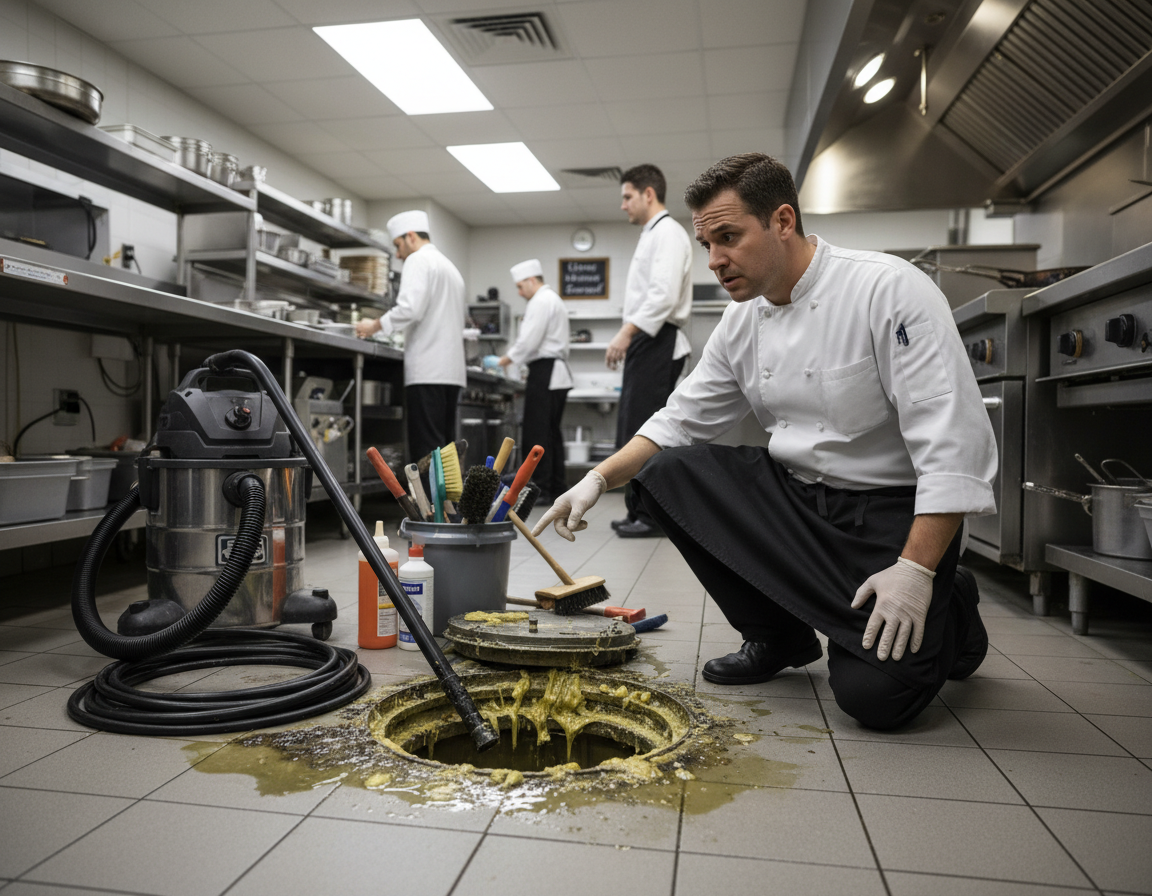
  • Wet/Dry Vacuum: Helps remove liquid and solid waste quickly.
  • Ladles and Scoops: Great for hands-on removal of hardened materials.
  • Buckets and Airtight Containers: Needed for short-term storage and proper disposal of FOG waste.
  • Scrub Brushes: For scrubbing the interior walls of the tank.

A simple preparatory step involves running cool water through the system for about ten minutes. This helps fats and oils set, making them much easier to remove later.

Implementing Safety Measures And PPE

Safety should never be an secondary concern. The environment inside these units can harbor harmful bacteria and present hazards.

Always wear full personal protective equipment (PPE) before starting. This includes heavy-duty gloves, safety goggles, a odor-blocking nose plug, and protective coveralls. This gear protects you from splashes and spills, strong odors, and direct contact with unsanitary conditions.

It’s also wise to have the contact information for a licensed plumber readily available. This ensures professional help is on hand if you encounter unexpected issues, like damaged baffles.

For smaller units under sinks, a DIY approach is possible. However, for most commercial kitchens, professional services eliminate the mess, health concerns, and significant time commitment.

Grease Trap Cleaning – Step-By-Step Techniques

Following a step-by-step approach ensures your FOG control unit functions optimally between professional services. This hands-on guide breaks down the procedure into clear, manageable stages.

Initiating The Cleaning Process

Begin by donning your protective gear and running cool water through the system for about 10 minutes. This cooling period helps FOG materials solidify for easier removal.

Carefully remove the lid using appropriate tools. Metal covers might need a pry bar or wrench, while plastic lids typically pop off easily. Always work cautiously to avoid damage.

Efficient Removal Of FOG And Debris

With a ladle in hand to skim the congealed layer sitting on the water’s surface. Place this material into airtight containers for safe disposal according to local regulations.

Move on to a wet/dry vacuum to extract the remaining liquid and solid bits. Ensure all kitchen drains are shut during this process to avoid refilling.

Scrub the interior walls, lid, and baffles with warm water and soap using a steel scrubber. This eliminates residue and prevents unpleasant odors from developing.

Finish by running a gallon of warm water down the drain to clear the system. Steady water flow signals successful maintenance. Refit all components properly once complete.

Although these steps work for smaller units, larger systems are best served by professional grease trap cleaning services that handle everything quickly.

Maintenance Strategies For A Healthy Kitchen

Proactive care for your establishment’s drainage infrastructure pays dividends in operational efficiency. Ongoing attention reduces the risk of unexpected shutdowns during busy hours.

Regular upkeep reduces unpleasant smells that can drive customers away. It also discourages pests that compromise your establishment’s hygiene standards.

Preventing Clogs And Unwanted Odors

Set up a routine schedule based on your kitchen’s specific needs. High-output kitchens with multiple fryers often demand more frequent attention.

Avoid sending cooking oil down sinks or toilets. Use designated containers for approved disposal instead. Reduce garbage disposal usage to avoid food particles from building up.

Avoid using soap or degreasers that can break down materials. This undermines the system’s purpose and causes downstream plumbing issues.

Routine Inspections And Compliance With Standards

Many municipalities set specific maintenance intervals. Violations can result in costly citations or short-term closures by health authorities.

Use the 25% rule for best performance. Service is needed when materials reach roughly one-quarter of the liquid level.

Kitchen Type Recommended Frequency Capacity Threshold
Standard Operations Every 1-3 months 15% capacity
High-Volume (Multiple Fryers) Multiple times monthly 25% liquid level
Small Under-Sink Units Weekly 25% liquid level

Planned professional services ensure compliance while extending equipment lifespan. This forward-thinking approach keeps optimal kitchen operations throughout the year.

Professional Services By Grease Cleaning Pros

Operating a successful food service business demands focusing on your customers, not plumbing emergencies. That’s where Grease Cleaning Pros delivers exceptional value for restaurant owners and commercial kitchens.

Our team makes scheduling maintenance simple. Use our online booking tools for scheduled appointments or call our 24/7 emergency line for immediate needs.

Service Overview And Expectations

When our technicians arrive, they start with a thorough inspection of your system. This allows us to provide itemized, up-front quotes with zero hidden fees.

We use heavy-duty, specialized equipment to quickly remove materials from your unit. Our truck-mounted storage tanks handle the waste while we clean all components thoroughly.

During the process, we identify any malfunctioning parts. Most repairs can be completed on the spot, preventing future problems.

Benefits Of Partnering With Experts

Often the greatest advantage is proper disposal handling. We transport collected materials to approved facilities, eliminating this challenge for your staff.

Ongoing maintenance programs ensure your system receives attention at optimal intervals. This helps prevent emergencies and keeps your kitchen compliant with regulations.

When you factor in the time savings, safety improvements, and peace of mind, professional service proves highly cost-effective for busy food establishments.

Final Thoughts On Efficient Grease Trap Cleaning

Effective grease management sets apart successful food establishments from those facing constant plumbing issues. Although this maintenance task might not be glamorous, it’s absolutely essential for smooth kitchen operations and regulatory compliance.

This guide has covered everything from grasping how these systems work to proper cleaning techniques. Regular maintenance helps prevent costly emergencies and keeps your facility running efficiently. Professional services eliminate the hassle, allowing your team to focus on serving great food.

Evaluate your current maintenance practices today. Are you fully protecting your plumbing system and preventing odors? Contact Grease Cleaning Pros for a professional evaluation. With the right approach, managing your kitchen’s essential equipment becomes easy and low-stress.

Related: Grease Cleaning Pros in Santa Clarita: Specialized Equipment for Deep Cleaning

The Complete Guide to Grease Trap Pumping Calabasas for Restaurants

Grease Cleaning Pros offers trusted grease trap services for restaurants and commercial kitchens across the United States. We remove accumulated grease, wastewater, and settled material so your unit operates properly and lowers downstream risk.

Click Here For Grease Trap Cleaning
Website About Grease Trap Cleaning
Go To Website Of Grease Trap Pumping

Our team operates on routine service cycles and keeps organized manifests to support inspections and local compliance. Interior cleaning uses high-pressure water—up to 3,000 psi—as required to rebuild performance beyond basic removal.

Choosing a full cleaning instead of a basic visit lowers odor, reduces plumbing interruptions, and helps prevent surprise shutdowns that hurt a busy kitchen. Grease Cleaning Pros offers scheduled maintenance and fast response when urgent problems arise.

We focus on operational outcomes for your business: less frequent service calls, solid plumbing safeguards, and a safer municipal flow by capturing FOG before it reaches the sewer. Contact us to build a reliable plan that keeps your kitchen open and compliant.

Commercial Grease Trap Pumping For Restaurants And Commercial Kitchens

Commercial kitchens need a kitchen-specific maintenance plan to keep plumbing running quickly and dependable.

Protect Your Kitchen Plumbing From FOG, Solids, And Wastewater Issues

FOG and trapped food solids are a common cause of sluggish drains and backups in restaurants. Dishwashers push a lot of oil and small food particles into the system, which increases the risk of ongoing clogs.

Regular service lowers that risk and helps inspectors see recorded compliance. Grease Cleaning Pros sets frequency to menu, volume, and dishwasher use so maintenance matches real output.

Support A Cleaner, Safer, And More Hygienic Back-Of-House Environment

When a unit is overdue, foul odors and slippery floors show up quickly. That creates unhygienic conditions and safety risks for staff.

Scheduled visits function as a proactive hygiene measure. Teams keep focus on service while our technicians manage the trap service and documentation.

Grease Trap Cleaning

  • Reduced drain interruptions and fewer emergency calls
  • Less odor and slip hazards in the back of house
  • Service plans tailored to your restaurant’s output
Factor Why it matters Typical service cadence
Menu type High-fat menus add more oil load Monthly to quarterly
Dishwasher volume Forces fine solids into plumbing Monthly
On-site practices Scraping and strainers cut FOG Quarterly or as needed

How A Grease Trap Works In A Modern Kitchen Plumbing System

A properly sized unit slows wastewater so oils rise and solids settle before water leaves.

How separation happens: Wastewater enters the inlet and reduces speed inside the retention tank. Lighter fats and oil rise to form a top layer while heavier solids drop to the bottom. The more clarified mid-layer is what should exit through the outlet.

Baffles and internal guides create a controlled path through the unit. This reduced-speed flow and guided route increase retention time so floating material has time to split out. Proper retention stops floating material from reaching the outlet and moving into downstream plumbing.

What leaves the unit should be largely pre-treated water with a significant amount of FOG removed. When the wrong material passes through, it can harden and cling inside sewer lines, causing blockages and backups that disrupt service.

  • Inlet: accepts wastewater
  • Baffle: directs flow and prevents pass-through
  • Retention tank: creates three zones (top layer, middle water, bottom solids)
  • Outlet: sends out treated effluent

Consistent service by Grease Cleaning Pros brings back tank capacity so separation works as designed. That safeguards your kitchen plumbing and minimizes the risk of costly sewer problems.

Grease Trap Cleaning Vs. Pumping: What Your Service Actually Includes

A straightforward explanation of what a full service covers helps kitchen managers compare quotes and avoid surprise fees.

Grease Cleaning Pros distinguishes the two stages so customers know what to expect on each job.

Evacuation First, Then Interior Cleaning For Better Results

Pumping is the evacuation of liquid and solids from the unit. Cleaning means washing interior walls, baffles, and lids so residual material does not remain attached.

We remove contents first to improve clear access and access. Removing liquids and solids makes the wash step quicker, less messy, and less disruptive to kitchen operations.

Why High-Pressure Water Cleaning Matters

A dried ring often lingers after a pump-only visit. This hardened layer reduces capacity and can grow between services.

Professional technicians use high-pressure water—up to 3,000 psi—to remove stuck-on material. Follow-up washing can make the unit look close to new and delay the return of buildup.

“Full cleaning, not just pump-out, is the most effective way to reduce odors and recurring blockages.”

Step What it covers Operational benefit
Evacuation Remove liquids and settled solids Improves access for cleaning
Interior wash High-pressure water cleans walls and baffles Reduces odors and residual layers
Verification Inspect and document results Clear expectations for next service

Choosing full trap cleaning over pump-only helps clean grease from problem areas and protects long-term plumbing performance.

Our Grease Trap Service Process At Grease Cleaning Pros

Each service visit from Grease Cleaning Pros starts with a safety and access review to accelerate service and minimize disruption. We use a repeatable checklist so customers know what to expect and inspectors get well-organized records.

Pre-Service Site Check

We verify access points, inspect lids and document site conditions. Our team flags anything that could affect a safe, complete job.

Full Evacuation

We remove accumulated grease, wastewater, and settled solids to restore the unit’s working volume. This step sets up the unit for thorough cleaning and reduces the chance of pass-through to downstream lines.

Interior Wash-Down

When needed, technicians use professional methods including high-pressure water to cut through the stubborn layer and cut odors. This cleaning step enhances separation performance.

Verification And Records

We verify component placement and check for signs of pass-through. Grease Cleaning Pros provides manifests, logs the last service date, and keeps customer records to support regulations and inspections.

Routine Grease Trap Maintenance Cycles That Keep You Open And Operating

A steady maintenance schedule is one of the most effective ways to avoid costly downtime in a busy kitchen.

Why Many Jurisdictions Enforce A 90-Day Window

Across much of the United States, rules require a service interval near 90 days. These limits minimize sewer risk and help inspectors confirm compliance.

Falling behind on a required date can mean fines or forced closures. Staying on schedule protects both revenue and reputation.

The 27% Rule And When To Schedule Service

A straightforward measure steers decisions: when grease climbs to about one-quarter of the liquid layer, plan cleaning right away—even if the calendar suggests there’s still time to spare.

This rule reduces pass-through, helps safeguard downstream plumbing, and keeps the unit functioning as designed.

Adjust Frequency To Your Menu And Volume

Oil-heavy menus, large party service, or heavy dishwasher use will accelerate buildup. Raise maintenance for deep-fry or high-output restaurants to prevent issues.

Dishwashers And Best-Practice Habits

Dishwashers often push the most FOG into the system. Scraping plates and using sink strainers limit solids before they enter the drain, keeping the trap from overloading.

Teach staff to remove food and trap particles before they hit the unit. Small habits decrease service needs, slow buildup, and stretch time between visits.

How Grease Cleaning Pros Helps

Grease Cleaning Pros assesses your output, factors in daily volume, and builds a workable schedule that satisfies local rules and your operational needs.

We set reminders, provide manifests, and adjust service as your kitchen changes so you stay operational and compliant.

Grease Trap Types We Service Across The United States

Not every unit under a sink works the same; identifying the model shapes service steps and schedules. Correct identification helps set the proper method and frequency so your kitchen stays compliant and open.

Passive Under-Sink Units

These small, indoor units sit beneath sinks. They have small capacity and often need regular checkups. They’re common in smaller kitchens and bars.

Hydromechanical Interceptors

Compact systems use baffles and flow control to improve separation in a smaller footprint. These are efficient for mid-range output and fit inside or near the kitchen.

Gravity Interceptors

Large outdoor tanks—often 1,000+ gallon—provide extended retention time and serve large-scale kitchens. They usually follow a 90-day cycle, but schedules adjust based on actual load and menu needs.

Automatic Recovery Units

These systems heat and move oil into an external container. Cleaning focuses more on recovery handling and different access points than smaller tanks. Regular service prevents operational issues and limits manual handling.

Grease Cleaning Pros can service these different traps across the United States and tailor work to each system’s design and needs. Our approach is based on proven methods refined over years in commercial plumbing environments.

Type Typical location Service note Typical cadence
Passive under-sink Inside, under sink Smaller capacity; frequent checks Monthly to quarterly
Hydromechanical Indoor/near kitchen Baffles + flow control; compact Quarterly
Gravity interceptor Outdoor, large tank High volume; longer retention 90 days or load-based
Automatic recovery unit Indoor with external container Heats and transfers oil; special handling Collection-based checks

Common Grease Trap Problems We Help Solve Fast

A prompt, calm response to warning signs prevents minor problems from becoming business-threatening events.

Slow Drains, Foul Odors, And Recurring Clogs

Slow drains, persistent odors, and clogs that come back after a quick clear are the main warning signs your unit is overdue. These symptoms often show up first at sinks and dishwashers.

Addressing them early keeps staff focused on service and minimizes the chance of an unexpected shutdown.

Sewage Backups And Emergency Risks

Left unchecked, backups can turn into an emergency that forces a kitchen to close. That harms customer service and hits daily revenue.

Rapid response minimizes sanitation exposure and cuts cleanup and repair costs.

Pass-Through And Sample Well Evidence

When oily material appears in a sample well or downstream manhole, it signals pass-through. That means the unit is overloaded or not separating water and oil properly.

When Symptoms Point To Broader Plumbing Problems

Not every symptom is a trap problem. Restrictions downstream, collapsed lines, or damaged flow controls can mimic trap failures.

Grease Cleaning Pros assesses the issue and recommends the fastest fix—whether that is a focused grease trap cleaning, line service, or a plumbing repair—to protect your staff and business.

“Addressing the full waste pathway from fixture to main line reduces repeat calls and keeps kitchens open.”

Emergency Grease Trap Services With Rapid Response

When a kitchen faces an urgent blockage, every minute off the line can cost seats and reputation.

When Every Minute Counts For Customer Service And Revenue

An emergency includes overflowing fixtures, sudden strong odors, backups at sinks, or any condition that threatens a shutdown during peak service. These events immediately affect covers, canceled orders, and staff workflow.

Our team prioritizes fast stabilization to restore basic kitchen function. We assess risk on arrival, stop further discharge, and clear the immediate obstruction so staff can resume service.

After-Hours And Weekend Scheduling To Minimize Disruption

Grease Cleaning Pros offers flexible windows and after-hours visits to avoid busy shifts. For customers on a service cycle, 24/7 response is available so problems get handled without a daytime shutdown.

  • What we treat as an emergency: backups, overflows, sudden odors, or a unit that threatens closure
  • Business impact: downtime means lost revenue, canceled covers, and potential health inspections
  • How we communicate: clear arrival windows, on-site updates, and next-step recommendations

Staying on a routine cycle minimizes emergency calls. Regular service lowers the chance of unplanned closures and keeps operations steady.

Health Department And Local Grease Trap Regulations: Staying Compliant

Clear records often decide whether an inspection becomes a fast review or an enforcement action.

What inspectors look for: most health officers ask to see manifests and the last service date. Presenting a stamped manifest shows recent work and avoids follow-up questions.

Why Manifests And Service Dates Matter

If the last recorded grease trap pumping date falls outside the local window—often near 90 days—inspectors may issue a short deadline to correct it. That can mean fines or an order to schedule immediate work.

How Consistent Recordkeeping Helps

Organized logs reduce stress when staff turnover or misplaced paperwork makes answers hard to find. Digital manifests and clear labels make audits quicker and more straightforward.

Plan Ahead To Avoid Fines

Proactive scheduling keeps you inside regulations and limits last-minute disruption. Grease Cleaning Pros keeps manifests, communicates upcoming dates, and helps coordinate with local health offices so your job stays on record and compliant.

FOG Waste Disposal Done The Right Way

After removal, the way we handle FOG and solids matters as much as the service itself. Proper end-to-end handling keeps local sewers and treatment plants functioning and reduces compliance risk for your business.

Responsible Handling Of Fats, Oils, Grease, And Solids

What comes out during service is a mix of fats, oils, grease, wastewater, and settled solids. Each stream needs documented transport and proper disposal to meet local rules.

Why Professional Disposal Helps Protect Municipal Systems

Improper disposal can cause hardened deposits in downstream lines and stress wastewater plants. That leads to blockages, fines, and community harm.

  • We gather and label removed waste for compliant transport.
  • Licensed disposal prevents contamination of the water system.
  • Complete manifests and receipts keep inspections fast and clear.

Grease Cleaning Pros treats disposal as part of the job. Our documented, professional approach protects municipal infrastructure and your restaurant’s reputation.

Why Businesses Choose Grease Cleaning Pros For Professional Grease Trap Services

Reliable service begins with people who know restaurant rhythms and the paperwork that keeps inspections simple. Grease Cleaning Pros builds a predictable plan so managers and staff can focus on customers and food, not emergency calls.

Experienced Team And Consistent Quality

Our technicians follow repeatable checklists developed over years of field work. This minimizes missed steps and keeps cleaning outcomes consistent across locations.

Service Designed For Busy Kitchens

We schedule around prep and rush times, tailoring maintenance to menu and volume. That keeps high-traffic kitchens open and minimizes surprise downtime.

Clear Communication And Customer-First Reliability

Grease Cleaning Pros documents each visit and shares manifests so compliance is easy. We also identify when a visible issue is actually a plumbing or flow problem and recommend the correct fix.

“Consistent arrivals, clear scope, and trained technicians protect operations and cut emergency calls.”

Choose a partner that meets operational needs, protects staff workflow, and delivers dependable trap services so your business stays running.

Schedule Grease Trap Pumping With Grease Cleaning Pros Today

Contact Grease Cleaning Pros to lock in a service plan that keeps your kitchen running. We schedule grease trap pumping and set a maintenance cycle based on menu, volume, and local rules so inspections and operations stay on track.

Tell us the trap location, approximate size, last service date, and any current problems such as odors or slow drains. That information helps speed arrival and helps technicians bring the right gear for trap cleaning and interior cleaning when needed.

If time matters, request our emergency response to minimize lost covers and revenue. Proactive service prevents downstream plumbing issues, cuts FOG-related problems, and makes health inspections smoother.

Ready to book? Call or request a quote today and our team will confirm timing, documentation, and a work plan that supports your staff and business with dependable, professional service.

FAQ

What Do Professional Grease Trap Services Include?

Most professional service visits start with an inspection of access points and lids, followed by a full pump-out of oils, wastewater, and settled solids. Technicians perform an interior wash-down to remove buildup, check baffles and flow controls, and complete post-service verification and paperwork to support health department compliance.

How Often Should A Commercial Kitchen Schedule Maintenance?

Many jurisdictions suggest about a 90-day window for routine service, but frequency depends on menu, volume, and kitchen practices. If the oil layer reaches roughly 27% of the unit depth, or if you notice slow drains or odors, schedule service sooner.

What’s The Difference Between Cleaning And Pump-Out?

Pump-out removes liquids and solids from the unit. Cleaning goes further: technicians scrub interiors and use high-pressure water to remove rings and stubborn buildup so the system separates FOG and solids more effectively.

Can Routine Maintenance Prevent Sewer Backups And Fines?

Yes. Regular service reduces the chance of pass-through, clogs, and sewer backups. Proper documentation and manifests also help during inspections and can prevent fines, tickets, and costly shutdowns.

What Types Of Interceptors And Systems Do You Service?

Technicians work on under-sink passive units, hydromechanical interceptors with baffles and flow controls, larger gravity interceptors used outdoors, and automatic grease recovery units—each requires different access and cleaning approaches.

How Do Dishwashers Affect Unit Performance?

High-temperature dishwashers can push emulsified oils into the plumbing, reducing separation efficiency and increasing service frequency. Proper pretreatment like scraping and strainers helps limit FOG entering the system.

What Signs Indicate An Emergency Service Is Needed?

Immediate attention is required for slow kitchen drains, foul odors, visible grease in sample wells, or any sewage backup. Rapid-response crews can perform after-hours or weekend visits to minimize revenue loss and health risks.

How Should FOG Waste Be Disposed Of After Service?

Collected fats, oils, and solids must be handled and transported to licensed disposal or recycling facilities. Professional companies use manifests and follow local rules to protect municipal systems and reduce environmental impact.

Will Cleaning Reduce Lingering Odors In My Kitchen?

Interior wash-down and complete removal of settled solids significantly cut lingering odors. Technicians may also recommend operational changes, such as better scraping and strainers, to lower future odor buildup.

What Documentation Should I Expect After A Service Visit?

Expect a service report that lists the date, volume removed, observations, any repairs or recommendations, and manifests for proper disposal. This documentation supports health inspections and internal recordkeeping.

How Do I Know If A Problem Is The Interceptor Or The Plumbing?

Technicians evaluate whether odors and backups stem from an overloaded unit or downstream plumbing issues. If the interceptor is within spec but problems persist, a licensed plumber may be needed to inspect sewer lines and vents.

Can Automatic Recovery Units Change Cleaning Needs?

Yes. Automatic units reduce manual maintenance but still require periodic checks, solids removal, and service of mechanical parts. Cleaning intervals and procedures differ from passive and gravity systems.

What Best Practices Reduce The Need For Frequent Service?

Train staff to scrape plates, use sink strainers, limit oil disposal down drains, and schedule regular maintenance. These steps lower FOG and solids entering the system and extend the interval between professional services.

Are Emergency After-Hours Services Available To Avoid Downtime?

Many professional companies provide rapid-response options for nights and weekends to prevent kitchen closures. Confirm availability and response times when you set up service agreements.

Related: Grease Trap Pumping in Whittier New Restaurant Opening Essential First Pumping

Getting the Most Value from Your Grease Trap Cleaning Manhattan Beach Service

Operating a high-traffic commercial kitchen includes its challenges, particularly when it comes to handling fats, oils, and grease (FOG). If not properly handled, these substances can cause unpleasant odors, backup events, and expensive plumbing problems. That’s where Grease Cleaning Pros steps in.

At Grease Cleaning Pros, we understand the unique challenges faced by restaurant owners and facility managers in maintaining their kitchen’s drainage system. Our team offers professional grease trap cleaning and pumping services designed to reduce disruption and improve efficiency.

Check Out Grease Trap Cleaning
Visit Website Of Grease Trap Cleaning
Check Out Grease Trap Cleaning

With years of hands-on experience, we provide end-to-end maintenance that help prevent high-cost plumbing problems and ensure compliance with local regulations. See how our customized solutions can help protect your operation and maintain kitchen productivity.

Key Takeaways

  • Get expert grease trap cleaning and pumping for commercial kitchens.
  • Full-service maintenance that reduces emergency plumbing risks.
  • Customized solutions to maintain kitchen efficiency and compliance.
  • Dependable service delivered by experienced professionals.
  • Safeguards that protect your operation and your investment.

The Importance Of Professional Grease Trap Maintenance

Grease trap maintenance is not just a necessity, but a critical investment in your business’s operational efficiency and longevity of your plumbing infrastructure. Proactive maintenance is key to preventing costly issues.

In the absence of proper maintenance, grease traps can become overloaded with grease buildup, leading to sudden backups and health code violations. Regular professional cleaning ensures that your grease trap operates at maximum efficiency, effectively separating FOG from wastewater.

Beyond only reacting to problems, Grease Cleaning Pros emphasizes preventive maintenance to help you reduce last-minute closures and unplanned expenses. Trained technicians can also identify early warning signs before they turn into major repairs.

Bottom line, professional maintenance keeps your system operating efficiently, helps you remain compliant, and reduces the chance of messy backups that can interrupt your kitchen’s workflow.

  • Grease trap maintenance is more than a requirement; it’s a critical investment in efficiency.
  • Without proper maintenance, grease traps can cause backups and code violations.
  • Grease Cleaning Pros focuses on preventative maintenance, not just emergency response.
  • Professional service helps keep your grease trap operating at peak efficiency.
  • Qualified technicians help identify issues early—before they become major problems.

Grease Trap Cleaning

Understanding Grease Traps: How They Protect Your Plumbing

Grease traps are vital for maintaining a reliable plumbing system in commercial kitchens. At Grease Cleaning Pros, we understand the importance of these devices in preventing major plumbing headaches. A grease trap is a plumbing device designed to capture fats, oils, and grease (FOG) from wastewater before it enters the sewer system.

By slowing down the flow of wastewater, grease traps allow FOG to float to the top while solids sink to the bottom. The cleaner water then exits through an outlet pipe, keeping FOG out of the main sewer line. This process protects your plumbing system and helps your business comply with local health and environmental codes.

Since these devices only capture FOG (they don’t dissolve it), the trap must be serviced regularly to keep separation working properly. When maintenance slips, FOG can pass through into the plumbing line and create downstream blockages.

Types Of Grease Traps And Interceptors

There are several types of grease traps and interceptors available, catering to different kitchen sizes and needs. At Grease Cleaning Pros, we service all types, from small under-sink units to large in-ground interceptors.

Type Description Typical Use
Small Under-sink Grease Trap Compact unit installed under the sink Small establishments, cafes
Large In-ground Interceptor Large unit installed outdoors High-volume restaurants, institutional kitchens

How Grease Separation Systems Work

Grease separation systems work by using gravity to separate FOG from wastewater. The effectiveness of these systems directly impacts your business’s operational performance and compliance with local regulations. Regular maintenance by professionals like Grease Cleaning Pros is essential to ensure optimal performance.

Understanding your grease trap’s design and rated capacity is crucial for determining the appropriate cleaning frequency and maintenance schedule. By maintaining your grease trap, you can avoid costly plumbing emergencies and ensure your kitchen operates reliably.

Signs Your Commercial Kitchen Needs Grease Trap Cleaning

Recognizing the signals that your grease trap needs cleaning can save your commercial kitchen from potential breakdowns. A grease trap that is not functioning correctly can lead to a range of problems, from unpleasant odors to serious backups.

Catching issues early helps you avoid unexpected closures and protect your staff from emergency cleanup. If you notice any of the following symptoms, it’s time to take action.

Persistent Odors And Slow Drainage

One of the first signs of a grease trap issue is the presence of persistent unpleasant odors emanating from drains or the trap area. Additionally, slow sinks and floor drains throughout your kitchen signal that your grease trap may be approaching capacity.

Backups And Overflow Issues

When backups or overflow issues occur, prompt professional attention is required. These symptoms indicate that your trap has filled past capacity, with FOG occupying more than 30% of the trap volume.

Once you reach that stage, continuing to run the kitchen can drive more FOG into plumbing, increasing the likelihood of a major backup. Fast service helps keep the situation from escalating.

Structural Damage Indicators

Visible structural damage, such as rusted covers, cracked baffles, or compromised seals, not only reduces the efficiency of your grease trap but can also lead to leaks, contamination, and compliance violations. At Grease Cleaning Pros, we recommend scheduling an inspection at the first sign of these issues.

Comprehensive Grease Trap Cleaning & Pumping Services

At Grease Cleaning Pros, we specialize in thorough grease trap cleaning and pumping services designed to maintain your system’s optimal performance while ensuring compliance with local regulations.

From inspection to paperwork, our goal is to make grease trap service easy for busy kitchens. You get consistent scheduling, thorough work, and clear documentation that supports compliance.

Our Professional Cleaning Process

Our professional cleaning process begins with a thorough inspection of your grease trap system to assess its condition and determine the most effective cleaning approach based on the type and size of your trap. Using specialized equipment, our technicians completely evacuate all contents from your grease trap, including accumulated FOG, food solids, and wastewater.

Next, we clean key internal components—such as baffles and flow paths—so the system can separate properly after service. We also check for wear and highlight any issues that could lead to failures if left unaddressed.

Customized Maintenance Schedules

Understanding that every kitchen operates differently, we develop customized maintenance schedules based on your specific needs, considering factors such as kitchen volume, menu type, and local requirements. Our scheduling flexibility allows us to perform services during low-traffic hours, minimizing disruption to your business operations.

With Grease Cleaning Pros, you can rely on our expertise to keep your grease trap in great shape. Our services include thorough cleaning, pumping, and maintenance, all performed by trained technicians who prioritize environmental safety and adhere to local regulations.

The Environmental Impact Of Proper FOG Management

Proper management of fats, oils, and grease (FOG) plays a significant role in safeguarding our environment. Grease Cleaning Pros is committed to responsible environmental practices, ensuring that all collected FOG waste is properly transported and processed according to EPA guidelines and local regulations.

When FOG is managed properly, kitchens reduce the likelihood of blockages that can lead to spill events and pollution. Responsible service protects water resources and supports better outcomes for the community.

Preventing Water Contamination

When FOG enters the municipal sewer system, it can create massive “fatbergs” that block pipes, cause sewage overflows into natural waterways, and damage treatment facilities. Regular grease trap maintenance is crucial in preventing these issues and protecting our water resources.

Sustainable Disposal Practices

Our sustainable disposal methods include recycling collected grease for use in biodiesel production and other beneficial applications. This approach not only diverts waste from landfills but also creates valuable resources, contributing to a more circular economy.

We also emphasize correct containment and transport so waste ends up in approved channels, not dumped improperly. That means your kitchen stays compliant while supporting responsible handling practices.

Disposal Method Environmental Benefit
Recycling for Biodiesel Reduces reliance on fossil fuels
Proper Landfill Disposal Prevents water contamination

By partnering with Grease Cleaning Pros for your grease trap maintenance, you’re not only protecting your business but also contributing to water conservation efforts and reducing your environmental footprint. We provide detailed documentation of proper waste disposal, helping your business demonstrate environmental responsibility and compliance with increasingly stringent regulations regarding commercial kitchen waste management.

Compliance With Local Regulations And Health Codes

Understanding and adhering to local health codes and regulations regarding grease traps is necessary for commercial kitchens. Compliance is not just about avoiding fines; it’s about maintaining a safe environment for your customers.

Staying compliant also protects your brand. When kitchens have clear service records and predictable maintenance, it’s easier to pass inspections and avoid disruptions.

Understanding Your Regulatory Requirements

Grease Cleaning Pros helps businesses navigate the complex landscape of regulations. Our team stays current with all local, state, and federal regulations regarding FOG management, ensuring our customers’ operations remain fully compliant. We develop customized maintenance schedules based on your business type, location, and operation size to ensure continuous compliance while optimizing costs.

Documentation And Record-Keeping Services

After each service, our technicians provide a detailed service manifest, creating an audit-ready trail of compliance that can be presented during health inspections. We maintain secure digital records of all services performed, including dates, conditions found, work completed, and waste disposal information. This documentation is available to you or regulatory authorities upon request, ensuring transparency and compliance.

Having these records means you’re prepared for inspections, audits, and routine reviews without scrambling for paperwork. It also helps you track patterns so you can adjust service intervals when output changes.

Service Description Benefits
Regulatory Compliance Guidance Understanding local regulations and health codes Avoids fines and legal issues
Customized Maintenance Schedules Tailored maintenance based on business needs Optimizes costs and ensures compliance
Detailed Service Manifests Comprehensive records of services performed Provides an auditable trail for health inspections

At Grease Cleaning Pros, we understand the importance of compliance and are committed to helping our customers stay on top of their grease trap maintenance. By choosing our services, you not only ensure your kitchen’s efficiency but also its compliance with local regulations.

Benefits Of Regular Grease Trap Maintenance

By investing in regular grease trap maintenance, businesses can significantly cut the risk of plumbing emergencies. Regular cleaning with Grease Cleaning Pros delivers multiple benefits that positively impact your bottom line and daily operations.

Beyond preventing backups, consistent service helps you maintain predictable costs and reduces the likelihood of urgent repairs that can be far more expensive than planned maintenance.

Preventing Costly Plumbing Emergencies

Regular grease trap cleaning helps avoid unexpected backups that can force business closures and result in expensive repairs to damaged plumbing systems. This proactive approach saves money and maintains operational continuity.

Extending Equipment Lifespan

Regular maintenance significantly extends the lifespan of both your grease trap equipment and your entire plumbing system. By preventing corrosive buildup, you reduce the need for premature replacements and costly repairs.

Maintaining Kitchen Efficiency

Properly functioning grease traps ensure smooth drainage throughout your facility, preventing slow drains and unpleasant odors. This maintains productivity and creates a more pleasant working environment, ultimately supporting your business’s reputation.

When flow stays consistent, teams can move faster, sanitation improves, and service stays on schedule. That’s a simple operational win that shows up every day.

Maintenance Frequency Benefits
Every 1-3 months Prevents backups and odors, reduces risk of costly plumbing emergencies
Regular cleaning Extends equipment lifespan, maintains kitchen efficiency

As emphasized by industry experts, “Regular maintenance is key to avoiding the costly and inconvenient issues associated with grease trap neglect.” Investing in regular grease trap maintenance is a predictable, modest expense compared to the potentially devastating costs of emergency repairs or business interruptions.

Why Choose Grease Cleaning Pros For Your Business

When it comes to maintaining your commercial kitchen’s grease trap, experience and expertise matter. Grease Cleaning Pros is dedicated to providing premium grease trap cleaning and pumping services to businesses like yours.

You get more than just a one-off cleaning; you get a team that understands scheduling, compliance, and the day-to-day realities of a busy kitchen. That’s how you keep maintenance from becoming a distraction.

Experienced Technicians And Specialized Equipment

Our technicians undergo extensive training to ensure they can efficiently service any type or size of grease trap system. We invest in specialized equipment designed specifically for thorough grease trap cleaning and pumping, allowing us to complete services more quickly and effectively.

Minimal Disruption To Your Operations

Understanding that downtime costs you money, we schedule our services during your off hours or slower periods. This ensures minimal disruption to your daily operations while maintaining thorough cleaning standards. Our customers praise our responsive service and attention to detail, making us the preferred grease trap maintenance provider in the region.

Call Grease Cleaning Pros today to experience the difference that specialized service makes.

Additional Commercial Kitchen Maintenance Services

Grease Cleaning Pros offers a comprehensive suite of commercial kitchen maintenance services beyond our core grease trap cleaning and pumping solutions. Our goal is to keep your entire operation running smoothly.

By bundling services, you simplify scheduling, reduce vendor coordination, and keep the entire kitchen plumbing system in better shape. It’s a practical way to maintain consistency across your operation.

Drain Cleaning And Jetting

Our professional drain cleaning and jetting services use high-pressure water to clear hard-to-clear clogs and build-up in your kitchen’s plumbing system, preventing slow drains and backups.

Used Cooking Oil Collection

We provide convenient used cooking oil collection services, supplying appropriate containers and establishing regular pickup schedules to manage this waste stream responsibly.

Non-Hazardous Spill Cleanup

Our team is equipped to handle non-hazardous spill cleanup situations promptly and effectively, addressing accidental spills of cooking oils, grease, or other kitchen substances.

By bundling multiple services with Grease Cleaning Pros, you can streamline your maintenance schedule and often realize cost savings. All our services maintain high standards of professionalism and reliability.

Conclusion: Partner With Grease Cleaning Pros Today

By choosing Grease Cleaning Pros, you’re not just hiring a service, you’re investing in a partnership that safeguards your business. Our team brings years of specialized experience to every grease trap cleaning and pumping service, ensuring your commercial kitchen operates efficiently and effectively.

Reach out to determine your service requirements and establish a regular cleaning schedule today. Join our satisfied customers who have discovered the peace of mind that comes with having a reliable partner handling their kitchen maintenance.

Related: Keeping Bellflower Green with Grease Trap Cleaning in Bellflower

The Risks of Temporary Fixes for Grease Trap Repair in Beverly Hills

Imagine if that must-do maintenance job in your commercial kitchen was really an overlooked opportunity for greater operational success?

That was the perspective I developed when I faced the necessity for a new unit. This essential piece of equipment has changed a great deal since its Victorian-era beginnings. Modern technology delivers systems far superior to older systems.

This Site Is About Grease Trap Pumping
Explore More About Grease Trap Cleaning
See Details About Grease Trap Cleaning

From my standpoint, upgrading was not just an expense. It felt like a smart business move to save money and to prevent plumbing issues down the road. I understood this decision would affect day-to-day operations for years to come.

That is why I entrusted this critical service task fully to the experts at Grease Cleaning Pros. Their team’s deep understanding of the technical and hands-on parts of the process left me with complete confidence.

This guide acts as the complete guide I wish I’d had.

It guides you through all the important factors to consider for a seamless, well-informed Grease Trap Replacement that supports your entire operation.

Overview Of Grease Trap Replacement In Commercial Kitchens

The hidden plumbing infrastructure in any commercial kitchen play an essential role in day-to-day operations and long-term success. Understanding these systems enables operators to reach informed decisions about maintenance and upgrades.

Why Grease Traps Are Essential For Your Kitchen

These dedicated plumbing devices capture FOG (fats, oils, and grease) before they flow into municipal sewer lines. Without proper interception, severe clogs can interrupt my entire production flow.

The baffle setup inside these traps controls water flow , allowing separation to occur naturally. Clean water flows through the outlet while unwanted materials are held back. This system prevents clogging in piping and helps avoid overflow events.

How Grease Trap Replacement Enhances Operational Efficiency

Replacing older equipment with professional services strengthens wastewater management significantly. Modern systems lowers the frequency of plumbing problems that may stop production.

Proper systems also support maintain compliance with health & environmental regulations. That protection helps avoid citations and forced shutdowns that could impact ongoing operations.

Grease Trap Cleaning & Pumping

Common Problems Without Proper Systems Benefits With Modern Equipment Impact on Kitchen Operations
Frequent drain clogs Reliable wastewater flow Reduced downtime
Backups in sewer lines Prevented overflows Uninterrupted production
Regulatory noncompliance Ongoing compliance Operational protection
Costly plumbing repairs Sustained savings Budget stability

Key Factors To Consider In Grease Trap Replacement

Selecting the right system for my kitchen’s plumbing took more than just comparing upfront prices. I needed to see the full financial picture that would affect operations for years.

That complete approach helped me save money and prevented surprise shutdowns.

Total Cost Of Ownership Beyond The Purchase Price

The purchase price represents only one part of the total investment. I had to learn to account for recurring expenses like regular pumping fees and service costs. Those ongoing charges can significantly hit your annual budget.

Some units might need replacing in half the time than longer-lasting options. That earlier replacement essentially negates any early savings. Going with quality equipment tends to be less expensive over time.

Self-monitoring systems can lower service frequency, saving labor and costs. Bigger-capacity units might require pump-outs less often. These efficiencies add to lasting value.

Maintenance, Cleaning, And Availability Of Replacement Parts

Different trap types have different maintenance requirements. Some sites assign staff to clean it internally. Others prefer a professional service for consistent outcomes.

Availability of parts was a major factor for me. Waiting weeks for an essential component in peak season might interrupt operations. I verified that critical parts were readily accessible.

Routine maintenance schedules help plan expenses and reduce surprises. Understanding expected replacement intervals supports better budgeting. This preventive approach helps protect operations against unexpected downtime.

Assessing Durability And Code Compliance

The material composition of the new unit turned into a decisive factor in my decision process. I needed equipment that would withstand daily kitchen load while satisfying all legal requirements.

Evaluating Materials And Long-Term Reliability

Concrete units can corrode quickly with constant exposure to kitchen waste. They often can’t handle the harsh conditions as time goes on.

Many older metal designs typically last around 7 years before breakdown starts. This short lifespan means frequent system changes.

Newer options commonly use stainless steel and corrosion-resistant polyethylene. Brands such as Big Dipper and Trapzilla have proven track records that exceed two decades.

New plastic-based models fight rust and corrosion reliably. That durability helps justify the upfront cost by extended lifespan.

Compliance is just as important for a working kitchen. My system needs to meet all local, state, and federal regulations right away after installation.

Grease Cleaning Pros walked me through requirements from health departments, building inspectors, and sewer authorities. They made sure my choice matched all plumbing and building standards.

Grease Trap Replacement Options And Best Practices

Facing a failing unit demands a careful evaluation of repair versus full system change. That decision affects kitchen efficiency and operating budget substantially. I review multiple factors before deciding on the best path forward.

Comparing Repair Versus Replacement Remedies

Small leaks at seals tend to signal routine wear. These issues can often be repaired with professional service. That approach can save money when the equipment is newer.

However, repeat clogs and major structural damage signal deeper problems. A worn unit with corrosion often needs complete system change. Full replacement becomes the only practical option in these cases.

I compare short-term repair costs against long-range efficiency. Frequent breakdowns create unseen costs through lost time. A new unit often ends up more economical in the long run.

Selecting A Reliable Service Provider

I rely on Grease Cleaning Pros because of their thorough assessment process. They help me determine whether repairing or replacing best supports my operation. Their know-how helps prevent small problems from becoming major disruptions.

Professional installation work helps ensure the right sizing and compliance. That detail work helps protect the kitchen from future plumbing issues. Using experts builds confidence in the system’s performance.

Sizing And Installation Considerations For Commercial Kitchens

Determining the right specifications for my foodservice facility’s drainage system required careful calculation. Getting it right influences both compliance and efficiency significantly.

Working with Grease Cleaning Pros helped me pinpoint the exact capacity the operation needs. They consider sink dimensions, equipment output, and daily meal volume.

Understanding Capacity Needs And Space Constraints

Menu choices greatly influence the makeup of wastewater. A kitchen serving fried foods creates far heavier loads than a salad-focused kitchen.

Many urban sites often lack space for traditional large tanks. Grease Cleaning Pros walked me through compact solutions that fit basement or multi-floor installations.

Their tools calculate precise requirements without unnecessary oversizing. This approach reduces cost while maintaining compliance.

Correct sizing helps prevent recurring clogs and expensive emergency services. It also maintains smooth workflow at peak times.

Maintaining Your Grease Trap For Long-Term Performance

Correct upkeep of drainage equipment lengthens its lifespan while protecting my business from expensive plumbing emergencies. I work with Grease Cleaning Pros to build a maintenance routine that keeps everything running smoothly.

Their experience helps me avoid big issues that might take down service. Routine attention helps prevent small problems from becoming serious problems.

Effective Cleaning And Routine Maintenance Tips

I arrange professional service every 1 to 3 months depending on kitchen throughput. This routine cleaning removes accumulated debris before it leads to backups.

Between service visits, I keep sink strainers to stop food debris. My team is trained to place food waste in the proper bins rather than down the drain.

Recognizing Early Signs Of Grease Trap Failure

I watch for early warning signs including unpleasant odors or slow draining. These often signal emerging issues that need prompt attention.

Clogged pipes and frequent pump-outs show that the system is struggling. I deal with these symptoms right away to avoid a full failure.

Strategies For Preventing Plumbing And Sewer Issues

Routine inspections find leaks and early corrosion early. This proactive approach helps me avoid emergency repairs and interruptions.

Smart waste disposal habits stay my first line of defense. Training staff properly prevents most drain problems before they start.

Maintenance Practice Frequency Expected Outcome
Professional cleaning Every 1-3 months Prevents blockages and odors
Sink strainer use Daily Reduces solid waste entry
Employee training Continuous Proper waste disposal habits
Visual checks Weekly Early problem detection

Conclusion

Investing in effective wastewater management has been critical for business success. Relying on Grease Cleaning Pros for my equipment needs provided expert guidance throughout the entire process.

This resource has covered the key factors to make informed decisions. From understanding why these systems are essential to picking the right type and size, every consideration is important.

Considering total costs of ownership beyond just the purchase price creates better long-term value. Accurate sizing and code compliance help protect operations from compliance issues while properly managing kitchen wastewater.

Working with professional service ensures proper installation and maintenance. This partnership prevents major plumbing issues that may interrupt commercial kitchen operations.

I urge other owners to rely on this complete resource when dealing with equipment choices. Following these practices helps protect your plumbing systems and helps ensure steady operations for years to come.

FAQ

How do I know when my commercial kitchen needs a new system instead of just a repair?

I watch for specific signs such as repeated drain clogs, slow water drainage, or unpleasant smells from the unit. When plumbing lines back up frequently despite routine maintenance, it’s often a signal that the unit is failing. A professional assessment helps determine if a repair will do or if a full replacement is the better long-term solution for the business.

What factors influence the total price of installing a new unit in my food service establishment?

The total cost is driven by the size and the material of the new tank, the complexity of the installation, and local code requirements. Labor, permits, and any needed upgrades to my pipes or sewer connection also add to the total. I always request a detailed quote that itemizes each of these items to understand the full investment.

What are the benefits of choosing a high-quality, durable material for my new interceptor?

Choosing a durable material, such as heavy-duty plastic or concrete, can mean the system can last for many years with fewer issues. A durable interceptor resists corrosion from fats, oils, and waste, which reduces repair needs. This reliability protects plumbing and helps me avoid sewer line problems later on.

Can I handle the cleaning and upkeep myself, or should I hire a professional service?

While I can do basic maintenance, like scraping plates and using strainers, the deep cleaning required by health codes is best left to experts. A professional company uses the equipment and knowledge to fully pump out the unit, look for early failure signs, and handle the waste correctly. This regular service is essential for preventing clogs and ensuring kitchens run smoothly.

How important is correct sizing for my new interceptor, and what happens if it’s wrong?

Accurate sizing is essential for success. If the tank is too small, it will fill up too fast, causing overflow events and possible compliance violations. If the unit is too large, it becomes an unnecessary upfront cost and it takes more space than needed. I rely on a qualified provider who calculates the correct capacity according to kitchen water use and food output to avoid these problems.

Related: The Complete Guide to Grease Trap Pumping Calabasas for Restaurants

Long-Term Savings from Professional Grease Trap Replacement La Mirada

“An Ounce Of Prevention Is Worth A Pound Of Cure.” – Benjamin Franklin’s words hit especially hard for any commercial kitchen. A minor issue that’s ignored can rapidly turn into a serious, expensive problem.

Visit The Site Of Grease Trap Cleaning
Visit Website Of Grease Trap Pumping
Check Out Grease Trap Pumping

Grease Cleaning Pros is the trusted expert for keeping Atlanta’s restaurants and food service businesses running smoothly. They specialize in solving problems with the essential devices that keep kitchens compliant and operational.

When this critical system fails, it’s more than an inconvenience. It can trigger severe plumbing backups, health-code violations, and disruptive downtime. Prompt, professional service is more than a repair—it’s a requirement for compliance with local F.O.G. regulations.

The company is committed to delivering dependable, efficient solutions. Their work ensures minimal disruption so a business can get back to serving customers quickly. They prioritize long-lasting, code-compliant outcomes.

Their approachable, professional crew covers emergency fixes, scheduled maintenance, and new installs. This makes them a genuine one-stop partner for all grease management needs throughout the Atlanta metro area.

Don’t let a malfunction derail your operation. Contact Grease Cleaning Pros today for a fast assessment and a clear quote.

Key Highlights

  • Grease Cleaning Pros offers professional repair and maintenance services for commercial kitchens across Atlanta.
  • A malfunctioning grease interceptor can cause major plumbing issues, health code fines, and business interruptions.
  • Timely, professional service is essential for maintaining compliance with local F.O.G. regulations.
  • The company focuses on reliable repairs and minimal downtime to keep food service operations running.
  • They offer comprehensive solutions including emergency service, ongoing maintenance, and installation.
  • Local Atlanta expertise means they understand Georgia-specific requirements.
  • Proactive maintenance and quick professional help prevent small problems from becoming major expenses.

Understanding Grease Traps And Their Role In Your Kitchen

Behind the scenes in a busy restaurant, a specialized device works nonstop to prevent plumbing disasters. This equipment is essential for any food service operation that handles cooking byproducts.

Knowing how it functions and why it matters can save a business from major headaches. The team at Grease Cleaning Pros helps Atlanta owners understand these fundamentals for smarter kitchen management.

Grease Trap Cleaning & Pumping

What Is A Grease Trap?

A grease trap, sometimes called a grease interceptor or separator, is an essential plumbing device. It captures fats, oils, and grease from kitchen wastewater before this water enters the sewer system.

Inside the device, baffles slow down the flow of water. This allows the fats, oils, and grease to cool, solidify, and separate from the water.

Cleaner water flows out, while captured FOG stays behind for later removal. Grease traps come in multiple sizes to match a wide range of kitchen needs.

Small under-sink units support individual prep stations. Large in-ground concrete interceptors handle the heavy flow of a full commercial kitchen.

How Grease Traps Protect Your Plumbing And Business

These units play a vital role in protecting a business’s internal plumbing. Without a trap, fats, oils, and grease can solidify in pipes and create costly blockages and backups.

These blockages can shut down kitchen operations completely. A properly working interceptor prevents this by stopping FOG at the source.

It also helps protect the municipal sewer system. Local rules, including those associated with the Georgia F.O.G. Alliance, strictly prohibit FOG from entering public sewer lines.

Failing to comply can lead to significant fines. Grease Cleaning Pros understands Georgia-specific standards and ensures systems meet code.

In addition to compliance, proper maintenance supports better kitchen sanitation. It helps prevent foul odors and deters pests like rodents and insects.

This matters for every food service environment, from cafeterias to food trucks. Any establishment that cooks with oils or handles animal fats needs a reliable solution.

Grease Cleaning Pros acts as an educator, helping business owners see the full benefits of their grease management system. Understanding your interceptor is the first step toward proactive care.

This understanding helps prevent emergencies and keeps kitchens running smoothly. Regular maintenance, guided by experts, is the best defense against unexpected problems.

Common Grease Trap Problems That Demand Attention

Recognizing early trouble signs in this critical kitchen device can stop a full-blown crisis. These devices are built for hard work, but they can still fail.

When issues surface, they demand prompt professional attention. Ignoring them can lead to operational shutdowns, regulatory fines, and costly damage.

Grease Cleaning Pros encounters a consistent set of challenges in Atlanta’s food service industry. Understanding these common problems is the first step toward a reliable solution.

Clogs From Fats, Oils, And Grease (FOG)

The most frequent problem is a major blockage caused by accumulated fats, oils, and grease. This material—often called FOG—cools and hardens inside pipes and within the interceptor.

Blockages like this can completely halt wastewater flow. This problem often starts in drain lines serving sinks and dishwashers.

Eventually, the backup reaches the primary separation unit. This can cause overflows that flood the kitchen floor.

Imagine a restaurant facing a sudden closure during the dinner rush because sinks won’t drain. This situation shows why blockages must be handled quickly.

Grease Cleaning Pros has the tools to diagnose where the clog is coming from. Their crew clears the blockage efficiently so operations can return to normal.

Leaks And Structural Damage

Another serious issue involves leaks and weakened structural integrity. Concrete in-ground units can crack due to ground movement or age.

Access-point seals and gaskets can wear out and fail. Pipes connecting to the system may corrode over time.

These failures can allow untreated wastewater to leak into surrounding soil. That creates an environmental contamination risk.

It can also lead to property damage, including foundations and landscaping. Structural problems caused by vehicle traffic or settlement require a professional assessment.

This type of damage isn’t always visible at the surface. A thorough inspection by experts like Grease Cleaning Pros is crucial to identify hidden weaknesses.

Odors And Sanitation Issues

Foul smells from drains or around the interceptor often indicate a sanitation problem. These smells are caused by anaerobic bacteria decomposing trapped organic material.

That process creates hydrogen sulfide gas, known for its rotten egg odor. Persistent odors clearly indicate system failure.

They can quickly result in health-code violations during inspections. More importantly, they create a negative dining experience for customers.

A smelly patio or kitchen can hurt a restaurant’s reputation. Addressing odor sources at the root is essential for food service businesses.

Often, these problems compound one another. A clog can trigger an overflow, stressing seals and causing leaks.

Standing wastewater can then promote bacterial growth and foul smells. That creates a multi-layered situation that needs a comprehensive solution.

What starts as a slow drain can quickly escalate into an emergency that shuts down a kitchen.

Grease Cleaning Pros acts as a rapid-response team for these complex situations. They diagnose whether the issue is a simple blockage or a more complex structural failure.

Prompt professional intervention keeps a small issue from becoming a major expense. Their expertise ensures the system is restored to proper, code-compliant function.

Our Expert Grease Trap Repair Services

A malfunctioning interceptor demands a specialized set of solutions to get a food service operation back on track. Grease Cleaning Pros provides complete fixes tailored to the problems kitchens encounter. Their team tackles problems precisely, from simple clogs to complex structural failures.

These expert services are designed to restore full functionality quickly. The goal is always to minimize disruption to daily business. Each job is handled by licensed, bonded, insured professionals who know commercial kitchen plumbing inside and out.

Diagnosing And Fixing Clogs

Blockages from fats, oils, and grease are a common headache. The team first performs a thorough diagnosis to locate the exact source of the backup. They use advanced techniques to clear the line safely and effectively.

High-pressure water jetting can strip away stubborn accumulations. Mechanical augering might be needed for solid obstructions. In certain cases, specialized enzymatic treatments break down organic material without damaging pipes.

This approach ensures the flow is restored and future blockages are prevented. It’s a key part of keeping a kitchen’s plumbing system running smoothly.

Sealing Leaks And Replacing Components

Leaks must be handled quickly to avoid environmental and property damage. Technicians inspect for cracks in concrete, failed gaskets, or corroded pipes. They locate the precise failure point before starting repairs.

They apply permanent sealing methods to stop leaks at the source. If any section is too damaged, it’s replaced with new, durable materials. Worn parts—baffles, lids, outlet tees—are replaced as needed.

This restores the separator’s intended integrity. Using professional-grade tools and materials, every repair meets strict plumbing standards. The result is a durable solution that business owners can trust.

Restoring Optimal Performance

The ultimate goal of any service call is restoring the unit to proper, code-compliant efficiency. Grease Cleaning Pros doesn’t just patch problems; they optimize the entire unit. Their work ensures the unit captures FOG as intended.

This process transforms a problem unit into a dependable asset. It helps protect the business from costly penalties and operational shutdowns. The technicians work with an understanding of kitchen workflows to reduce downtime.

Professional intervention turns a liability back into protection for your plumbing.

With extensive grease-management experience, they function as system optimizers. Clients gain peace of mind knowing the job is done legally and responsibly. These services help keep Atlanta’s food service businesses running without interruption.

The Grease Cleaning Pros Repair Process: Step-By-Step

A clear step-by-step approach is what separates a lasting repair from a temporary patch in a commercial kitchen. Grease Cleaning Pros has perfected a method that is both systematic and deeply customer-focused.

Their approach is designed so the work is done right the first time. It converts a potential crisis into a managed project with a clear beginning, middle, and end.

Inspection And Assessment

Every solution begins with understanding. A certified technician arrives to complete a full evaluation.

This isn’t a quick glance. The inspection is thorough and data-driven.

  • Flow Check: The technician measures inlet and outlet water flows to identify restrictions.
  • FOG Measurement: They measure the level of accumulated fats, oils, and grease inside the unit.
  • Structural Exam: Each component—from baffles to tank walls—is checked for cracks and wear.
  • Plumbing Review: Connected drain lines are inspected for contributing issues or damage.

This thorough diagnosis pinpoints the precise issue and how far it extends. There are no guesses, only facts.

Tailored Repair Plan

Once assessment is complete, collaboration comes next. The technician develops a custom plan tailored to the specific needs of the business.

This plan is laid out clearly for the owner or manager. It details the needed work, a realistic timeline, and a transparent cost estimate.

Any permits required for the work are also discussed. The planning phase is a conversation, not a dictate.

“We work around your schedule, not against it,” says a company master plumber. “Reducing disruption to your restaurant is a core part of our plan.”

This approach ensures everyone is aligned before any work starts.

Efficient And Code-Compliant Repairs

After approval, the skilled team begins execution. They arrive equipped with the right tools and techniques for the work.

Whether clearing a major clog or replacing a damaged section, their work is precise. Every action is performed with an eye on local Atlanta and Georgia F.O.G. regulations.

Code-compliant repairs are non-negotiable. This ensures the business is positioned to pass future health or plumbing inspections.

The team‘s experience allows them to solve difficult problems efficiently. They collaborate, combining expertise to ensure success.

Once the work is complete, they clean the site thoroughly. The system is tested to confirm optimal performance before the technician departs.

This entire process reflects the company’s core values: understand before you act, and treat every customer like family. The result is a dependable long-term solution that keeps a kitchen’s plumbing running smoothly.

Why Choose Grease Cleaning Pros For Your Repair Needs

Trust is the foundation of any service relationship, especially when it involves the heart of your business—the kitchen. Choosing the right partner for essential maintenance impacts compliance, cash flow, and customer satisfaction.

Grease Cleaning Pros stands apart by offering more than a quick fix. They offer a complete partnership built on professionalism, deep expertise, and a real commitment to your operational success.

Licensed And Insured Professionals

Every job begins with a base of protection and quality. The company’s team consists of licensed, bonded, and insured master plumbers.

This isn’t just paperwork. It is a promise of accountability and skilled workmanship.

Customers are protected from liability. They gain confidence knowing their property and plumbing are in expert hands.

This level of professionalism is critical for commercial projects. It ensures work meets strict industry and local code standards from day one.

Years Of Experience In Commercial Kitchens

Technical skill becomes stronger with real-world knowledge. Grease Cleaning Pros plumbers bring deep hands-on experience specifically in commercial kitchens.

They understand the pressures of a busy restaurant. They know how high-volume cooking impacts plumbing systems.

This experience enables fast, accurate diagnosis. They don’t just see a clog; they understand the kitchen workflow that caused it.

Their strategic and collaborative approach means they develop solutions as a team. They apply collective expertise to ensure success even with difficult challenges.

“We treat every client like family, which means honest communication and respectful service from the first call,” says a company master plumber.

This mindset shows up as clear explanations and transparent pricing. Business owners value that straightforward partnership.

Commitment To Minimal Business Disruption

Time is money in the food service industry. The company’s process is designed around your schedule, not the other way around.

They prioritize reducing impact on daily operations. Repairs are often scheduled during off-hours or planned to keep the kitchen functional.

The team works with remarkable efficiency to get your systems back online fast. This dedication to limiting downtime protects your revenue and reputation.

Another key advantage is strong knowledge of local codes, including Georgia’s F.O.G. regulations. Choosing a service well-versed in these rules helps you avoid costly compliance issues.

Membership in organizations like the Georgia F.O.G. Alliance and the Georgia Restaurant Association demonstrates dedication to the industry. They’re committed to supporting Atlanta’s food service community long-term.

Ultimately, choosing Grease Cleaning Pros means choosing a single, trusted provider for all your grease management needs. From emergency repair to routine maintenance, they offer convenient, reliable solutions.

They become a partner invested in your smooth, successful operation for years to come.

Commercial Grease Trap Installation And Replacement

Grease Cleaning Pros goes beyond repairs, offering expert installation and replacement services. Sometimes, a unit is beyond saving, or a new kitchen needs a fresh start. The company handles these major projects with the same precision and care as their maintenance work.

They are a full-service provider for Atlanta’s food service industry. That means they can manage the full lifecycle of your FOG management system.

When To Consider Replacement Over Repair

Eventually, ongoing repairs can cost more than replacing the unit. A failing older separator or a new kitchen build-out are common examples. Choosing full replacement can be a strategic move for long-term efficiency.

Several clear signs suggest replacement is the better option:

  • Repeated Failures: If the same problem repeats after multiple repairs.
  • Extensive Corrosion: When the tank or components are heavily rusted or degraded.
  • Outdated Design: Older designs may not meet today’s efficiency or code requirements.
  • Changed Kitchen Volume: A remodel or menu shift can change volume needs and require different capacity.

Recognizing these signs early can help you avoid emergency situations. It allows for planned, budget-friendly upgrades.

Proper Sizing And Code Compliance

Getting sizing right is the most important step in a new installation. An undersized unit fails fast, while an oversized unit wastes resources. Grease Cleaning Pros are experts at determining the right capacity for any Atlanta business.

Their sizing approach is based on a detailed evaluation. They review the number and type of kitchen fixtures, peak wastewater flow rates, and local code mandates.

“We are experts at determining appropriate grease trap sizing in Atlanta,” says a company master plumber. “This ensures effective FOG capture starting day one.”

This careful approach ensures the new interceptor works as intended. It also ensures compliance with Atlanta and Georgia F.O.G. regulations from the beginning.

Seamless Installation Services

The company’s installation service is designed for minimal hassle. They manage the project from the first permit to the final inspection. That turnkey approach allows owners to stay focused on daily operations.

This includes obtaining necessary permits from local authorities. For in-ground concrete interceptors, excavation is handled carefully. Precise plumbing connections are made to integrate the new device seamlessly.

Grease Cleaning Pros installs a full range of grease interceptors. They handle compact under-sink models for tight spaces and large pre-cast concrete units for high-volume establishments. Their technicians are certified and deeply knowledgeable about local codes.

They know kitchen projects can be disruptive. They aim to work around the restaurant schedule whenever possible. The goal is to keep the business open and minimize lost revenue.

As a single-source provider, they manage everything. This includes removing the old unit safely, delivering the new one, professional setup, and startup testing. You get one point of contact and one team responsible for the entire job.

Investing in a professionally installed, correctly sized separator is a smart long-term decision. It helps prevent future issues, protects your plumbing, and helps maintain compliance. It provides a strong foundation for a kitchen that runs smoothly.

Preventative Maintenance To Avoid Costly Repairs

Shifting from reactive fixes to a planned maintenance routine transforms a potential liability into a reliable asset. This proactive approach is the smartest business practice for managing any kitchen’s wastewater system.

Grease Cleaning Pros strongly supports this strategy. They help Atlanta food service owners see regular care not as an expense, but as a vital investment.

Regular upkeep prevents small problems from escalating into big failures. It is the most cost-effective path to long-term operational smoothness.

Regular Pumping And Cleaning Schedules

The foundation of an effective plan is consistent pumping and cleaning. Frequency depends on interceptor size and kitchen volume.

In high-volume restaurants, this is typically needed every 1–3 months. A technician arrives and thoroughly evacuates the unit.

They remove all accumulated fats, oils, and grease (FOG), along with any settled solids. They scrub interior walls and baffles clean.

This process restores the separator’s full capacity and efficiency. It also includes a visual inspection for early signs of wear or damage.

Regular service is your first line of defense against clogs and backups. It keeps the entire plumbing system flowing properly.

Monitoring FOG Levels

Between service visits, internal monitoring is crucial. Kitchen staff play a major role in ongoing grease management.

Educating staff on best practices helps minimize improper grease discharge. Small actions make a big difference.

Scraping plates well before washing is essential. Collecting used cooking oil in dedicated containers instead of dumping it down the sink is another critical step.

Grease Cleaning Pros can provide staff training and reminders. That partnership helps reduce FOG levels in the system.

It extends the time between required pump-outs and improves overall kitchen hygiene. A little awareness prevents a lot of trouble.

Long-Term Maintenance Plans

To make this easier, Grease Cleaning Pros offers structured long-term maintenance plans. These agreements include scheduled visits with predictable pricing.

Clients get priority response and detailed service records. These logs are invaluable during health department inspections.

“A maintenance plan is cost-effective insurance for your kitchen’s sanitation and compliance,” according to a company expert.

Regular care delivers real business benefits. It avoids costly emergency service calls and reduces the risk of foul odors.

It can significantly extend interceptor lifespan. Most importantly, it ensures ongoing code compliance with local F.O.G. regulations.

Neglecting maintenance can cause serious consequences. Sewer line blockages can trigger fines and expensive required clean-ups.

The company also offers related services that complement core maintenance. Used cooking oil collection and drain-line jetting help support a broader kitchen hygiene strategy.

Grease Cleaning Pros goes beyond repairs. They work with businesses to build proactive routines that protect their investment and reputation.

For any food service operation, a maintenance agreement is a smart choice. It protects smooth and sanitary day-to-day kitchen function.

Serving The Atlanta Area With Reliable Service

For Atlanta food service operators, a partner who understands the local landscape is invaluable. Grease Cleaning Pros can be that partner. They’re a locally owned and operated business with deep roots and extensive experience across Metro Atlanta.

Their team knows the neighborhoods, the common challenges, and the codes that govern commercial kitchens locally. That local focus leads to faster, more effective solutions for clients.

Local Expertise In Metro Atlanta

Their plumbers live and work in the communities they serve. That gives them firsthand familiarity with area-specific plumbing codes and sewer district rules.

They understand the unique issues faced by restaurants in different parts of the city. Quick response is a hallmark of their operation.

Related: The Complete Guide to Grease Trap Pumping Calabasas for Restaurants